SAVRN Insights · Part one of two · Rounds 1 to 18

Three Levers,
One Loop

How we moved a production model from one-in-two to two-in-three in about a day, on one GPU. And what it says about how enterprise AI actually gets built.

Chad Everett Harris·Founder, SAVRN ·August 22, 2026 ·16 min read ·18 rounds · 48 golden cases · 9 sources
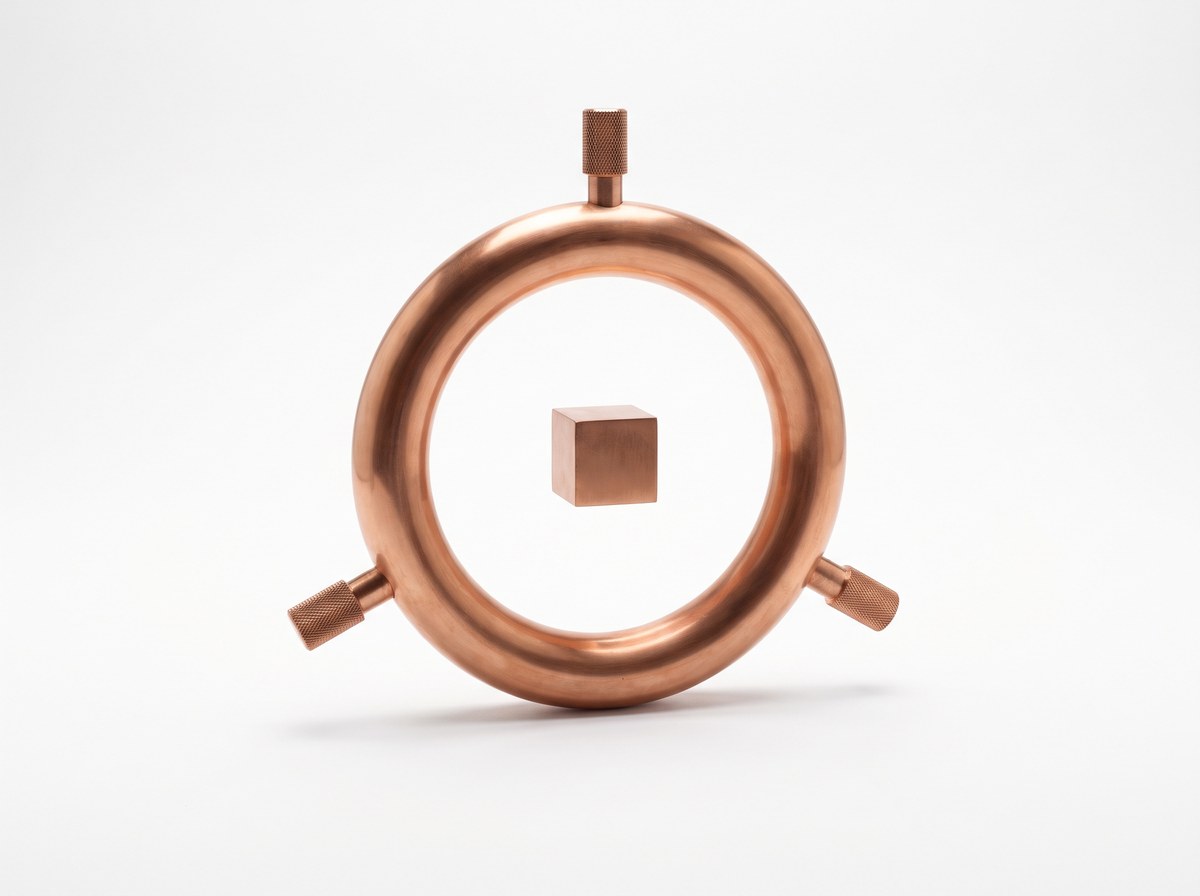
A polished copper ring standing upright with three knurled copper levers at the top, lower left and lower right, and a solid copper cube floating at its center: the loop of training, harness and evaluation around one production model
Accepted real workdeliverables → training rows
Training+6 pts · 1 of 18 promoted
Production model52% → 65%pass rate · one day
Evaluationnoise ±2 · bar +4 · confirm
Harness+7 pts · same weights
The loop this essay is about. Three levers around one model. The harness and evaluation levers moved the number more than training did.
18
training rounds on one rented H200, about a day of wall-clock time
one base model: OLMo 3.1 32B Instruct
52% → 65%
production pass rate on the 48-case golden set, same day
deterministic checks, not a judge
+6 / +7
points from the one promoted fine-tune, points from the harness
same weights for the harness gain
1 of 18
fine-tunes promoted, and it survived a confirmation run
the other 17 taught us something else
01 · Summary

Eighteen rounds, one day, one promotion. And most of the gain came from somewhere else.

Most conversations about enterprise AI start with model choice. Which base. Which size. Which lab. Which recipe. That conversation is not wrong. It is the wrong place to start.

Over one continuous program, on one GPU, on one fully open 32B instruct model, we ran eighteen training rounds against a deterministic golden set with a strict promotion bar. In about a day of wall-clock time, the production pass rate moved from roughly one in two to roughly two in three. One fine-tune was promoted. The training lever accounted for less than half of the gain. The rest came from two levers the industry rarely names in the same sentence as fine-tuning: the harness that runs around the model at inference, and the evaluation discipline that decides what ships.

This essay is the read on that program. It is also, on purpose, a statement of how SAVRN builds. Three arguments run underneath it. I want to name them up front so the evidence lands where it should.

Argument one

Engineering-first, not model-first

Base models are not black boxes. Every layer, from pretraining through mid-training, post-training, harness, and evaluation, is a place where failure has a shape and can be fixed on its own terms. Teams that treat the model as magic pay for movement they could have engineered.

Argument two

Leverage over brute force

On any given day, the cheapest lever is almost never the training lever. Compute-heavy fine-tuning is the last resort, not the first move. Constraints, critical path, and instrumented feedback loops move the number faster than more GPUs.

Argument three

Vertical integration compounds

Renting an API rents you a knob. Owning the full stack, weights, data recipe, training code, checkpoints, harness, evaluation, and the pipeline that turns real work back into training rows, gives you an engineering surface that gets stronger every quarter instead of weaker.

The rest of the piece is the evidence for those three claims, in that order. This is part one. It covers rounds one through eighteen. Part two will pick up at round nineteen.

02 · Argument one

Ownership as a precondition

We chose the base model on purpose. Ai2's OLMo 3 release is not just open weights. Ai2 calls it the model flow: the pretrained base, the mid-training checkpoints, the supervised fine-tuning stage, the DPO stage, the reinforcement learning stage, the training code, the data recipe, and the datasets themselves, all released together under permissive licenses (Ai2 · OLMo 3). The 32B instruct variant we tuned is pretrained on the Dolma 3 mix, about six trillion tokens of web, science, code, and math data, and post-trained on the Dolci suite. Checkpoints from each training stage are published alongside the final model (Hugging Face · Olmo 3.1 32B Instruct).

That level of openness is the precondition for everything below. A closed API gives you a knob. An open-weights release gives you a model. A fully open flow, weights plus data plus training code plus intermediate checkpoints, gives you the same engineering surface the original lab had. You can reproduce their recipe. You can resume from any stage. You can diagnose failures against the actual pretraining mixture. You can align your fine-tune to the schedule the base was trained under.

None of the eighteen rounds below would have been possible on a rented commercial model. Only the first few would have been possible on a weights-only release that ships without its training data or recipe. Two of the highest-ceiling levers still in front of us exist only because the entire flow is open: a multi-epoch fine-tune aligned to the base's own published schedule, and reinforcement learning against verifiable rewards.

Level 1

Closed API

  • A prompt box
  • A hosted fine-tune endpoint, at best
  • Someone else's evaluation
  • ×Weights you can inspect
  • ×The pretraining data
  • ×Any intermediate checkpoint
  • ×A schedule you can align to
Rounds possible: 0 of 18You rent a knob.
Level 2

Weights-only open

  • Weights you can serve locally
  • LoRA, SFT, and DPO on your own GPU
  • Your own evaluation
  • ×The data recipe
  • ×Mid-training checkpoints to resume from
  • ×The reference training schedule
Rounds possible: the first fewYou own a model.
Level 3

Full model flow

  • Weights, data, code, and checkpoints
  • The lab's own SFT, DPO, and RL recipe
  • Contamination checks against the actual corpus
  • Recipe-aligned SFT and RLVR
Rounds possible: all 18, plus the two queuedYou own an engineering surface.
The openness ladder. Each step up adds levers. Our eighteen rounds, and the two queued behind them, sit on the top step.
40% → 60–70%

Share of AT&T's roughly 100,000 employees' AI requests now routed through open-source models, and the target for the coming years. Coding costs cut by as much as 56 percent with a 2 percent decline in quality.

Mark Austin, AT&T vice president for employee AI tools, as reported by PYMNTS, August 20, 2026

The industry is moving in this direction for reasons that are not ideological. AT&T now routes 40 percent of its employees' AI requests through open-source models and is targeting 60 to 70 percent in the coming years. On coding and some other advanced tasks it reports cost cuts of as much as 56 percent with a 2 percent decline in quality, using model routers to send each task to the cheapest model that can do the job (PYMNTS, Aug 20, 2026, reporting first carried by The Information). The cost story is real. The compounding story is the one that decides who is still competitive in three years: a team that owns the full flow gets a better model on the same infrastructure every quarter.

SAVRN's position is that the complete model, the organized proprietary data, the dataset-to-training pipeline, and the owned training and inference infrastructure are one apparatus, not four line items. I made the case for that in The Ownership Divide. This essay is what it looks like on an ordinary working day.

03 · Argument two

Three levers, not one

Enterprise model quality is produced by three levers. Every team pulls the first. The program below is what happens when you pull all three and keep score.

A solid copper loop with three copper levers mounted on it and a copper cube at its center, standing beside a faded blueprint sketch of a single rotary knob: an owned model flow with training, harness and evaluation levers versus a rented API knob
A rented API is a knob. An owned model flow is a loop with three levers on it. The knob is the thing most enterprise AI programs are still turning.
Lever 01

Training

The recipe and the corpus that shape the weights.

+6 pointsone promoted round in eighteen
Cost per attemptGPU-hours, recipe design, corpus curation, and calendar time waiting for a run to finish
Lever 02

Harness

The deterministic scaffolding around the model at inference time: skill routing, deliverable contracts, length rules, exemplar pinning, output validation, repair loops.

+7 pointson the same weights, in the same day
Cost per attempta few hundred lines of deterministic code, a review, a deploy
Lever 03

Evaluation

The golden set, the judge, the noise floor, and the promotion rules that decide whether a candidate is actually better than what is already in production.

0 pointsdirectly; it is what made the other two readable
Cost per attempta golden-set edit and a re-run of the harness

The training lever is the one every team reaches for first. It is also the noisiest, the most expensive per unit of movement, and, below a certain data scale, the one with the lowest ceiling. The harness lever is nearly free, compounds across every future model version, and in our program moved the production number more than training did. The evaluation lever produces no score improvement on its own. Without it, the other two are indistinguishable from noise.

An engineering-first program pulls all three. The rest of this section walks each one, with the evidence.

04 · Lever one

Training: eighteen rounds, one promotion

Eighteen rounds. One base model. One GPU. A corpus in the low thousands of rows after quality filtering. The recipes spanned aggressive LoRA, gentle LoRA, completion-only supervised fine-tuning, Direct Preference Optimization on preference pairs, continued training from the current winner, and harness-aligned prompt formatting. LoRA is the standard parameter-efficient path for enterprise fine-tuning. It freezes the base weights and trains small low-rank adapters, cutting trainable parameters by orders of magnitude while keeping most of the quality of full fine-tuning (Hu et al. · LoRA, ICLR 2022). DPO is the standard preference step. It replaces the reward model and the PPO loop with a single closed-form loss over chosen-versus-rejected pairs (Rafailov et al. · DPO, NeurIPS 2023).

Eighteen rounds against the golden set
Pass rate per round (bars) and the promotion bar in force when it was scored (black ticks). Copper = promoted.
Golden-set pass rate by round, rounds 1 to 18 Round 1 scored 25 percent and round 3 scored 42 percent on the 24-case set. From round 4 on the 48-case set: 48, 52, 52, 52, 48, 52, then round 11 at 58 percent was promoted. Rounds 12 to 18 scored 48, 52, 54, 56, 58, 62 and 56 percent. Rounds 2 and 5 were not scored. 0% 25% 50% 75% stock OLMo · 52% 25 1 v1 × 2 v1 42 3 v1 48 4 × 5 52 6 52 7 52 8 48 9 52 10 58 11 48 12 52 13 54 14 56 15 58 16 62 17 56 18 promoted · re-measured 60% bar moved to 69% once production hit 65% under the new harness Round candidate promoted v1 set (24 cases) promotion bar × not scored
Golden-set pass rate by round. Rounds 1 and 3 were scored on the 24-case v1 set; round 4 onward on the 48-case v2 set. Rounds 2 and 5 never scored (a conversion failure and a full disk). The black tick over each bar is the promotion bar in force when that round was scored; it rose as production improved. Round 11 cleared it and was promoted; a second sample put it at 60%.

By family of round

The same eighteen rounds, grouped by recipe and read against the stock base model.

Family of roundBest result vs. stockRead
Aggressive LoRA on a small corpusLarge regressionRecipe overwhelmed the data. The model invented numbers and dropped output conventions.
Gentle LoRA, completion-only loss, teacher-generated Q/A corpusParity to small gainSix consecutive rounds landed within eval noise of stock.
DPO on a few hundred preference pairsParityPair set too small to move the model.
DPO on roughly a thousand pairs, longer scheduleParitySame read at a larger pair count.
Supervised fine-tune, revised recipe, low learning rateMeaningful gain, promotedThe one round that cleared the bar and survived a confirmation run.
Continued training from the winnerSmall regressionStacking the same corpus on the winner hurt.
Harness-aligned prompts injected into every training rowRegression on pass rate, best judge score to that pointOptimized the wrong signal.
Targeted wall packs against specific failure modesParity to small gainMoved individual failure categories, not the aggregate.

Two patterns worth naming

Training-seed variance is larger than eval noise.

Re-running the same recipe with a different shuffle moved the score by about six points. Re-running the same model through the same eval moved it by about two. Any promotion rule that does not require a confirmation run will promote noise. This is not a quirk of our setup. Controlled studies of fine-tuning find significant variance from the random seed alone, at the level of aggregate metrics and at the level of individual predictions (Bui, Savova & Wang · IJCNLP-AACL 2025).

Below a threshold data scale, the training lever is bounded.

The LIMA study showed that a 65B base model fine-tuned on just one thousand carefully curated prompt-response pairs, with no RLHF and no preference modeling, could match or beat heavily tuned commercial baselines in a controlled human study. Its authors concluded that almost all knowledge in large language models is learned during pretraining, and only limited instruction tuning data is necessary to teach models to produce high quality output (Zhou et al. · LIMA). The corollary is the ceiling. Once your fine-tune corpus is teaching format rather than knowledge, more of the same kind of data does not move the model. Our corpus cleared the LIMA floor in raw count but not in the count of genuinely human-authored, in-domain records. Of 6,586 rows, roughly 385 are real SAVRN records. The rest is teacher-generated Q/A over our knowledge base plus deterministic drill packs. Ai2's own fine-tuning guide puts the floor at 1,000 high-quality examples. That composition is the structural ceiling on this lever, not the recipe.

Why one good score is not a promotion
Points around a measured score on the 48-case set.
Noise floor versus promotion margin Eval-to-eval noise spans about plus or minus two points. Training-seed variance spans about plus or minus six points. The promotion bar is set four points above production, and every candidate that clears it must survive a confirmation run. -8-6-4-20+2+4+6+8 training-seed variance · about ±6 (same recipe, different shuffle) eval noise · ±2 promotion bar · production +4 above the bar: one confirmation run before anything ships production score A shuffle can move a candidate farther than the bar. Without a confirmation run, the bar promotes noise.
The corpus: 6,586 rows, about 385 of them human-authored
The structural ceiling on the training lever is composition, not count.
floor · 1,000 high-quality examples (LIMA; Ai2 guide)
385 human-authored SAVRN records6,201 teacher-generated Q/A + deterministic drill packs
The raw count clears the floor. The count of genuinely in-domain, human-authored records does not. More generated rows of the same kind did not move the model.
Two failure walls did not yield to any recipe in eighteen rounds: a strict JSON output shape on workbook specifications (0 of 5 in every round), and a length-and-grounding requirement on memos (0 of 4 until round 18's 1 of 4). Both eventually moved. Not through training.
05 · Lever two

Harness: the same weights, seven more points

The harness is everything the platform does around the model at request time. Skill routing. Retrieval. Deliverable contracts. Length rules. Exemplar pinning. Output validation. Repair loops. It is deterministic code, not weights.

In the same day the training lever moved the production pass rate by about six points, the harness lever moved it by about seven, on the same model. Four harness changes did most of that work.

Change 01

A skills registry the serving user could actually read.

A permissions gap meant the exemplar library was silently unreachable at inference time. Fixing the permission changed nothing about the model and moved the score.

Change 02

Exemplar pinning by deliverable kind.

Under a naive matcher over hundreds of skills, the right exemplars almost never fired. Pinning exemplars to the deliverable type, brief, proposal, memo, workbook, took briefs from two of six to four of six and proposals from zero of three to three of three, on the same weights.

Change 03

A default length policy for deliverables that arrive without one.

Memos with no stated length were coming out at 47 to 98 words, with no acknowledgment of the omission. A default floor with an explicit contract fixed the class.

Change 04

A produce, assess, repair loop on the deliverables that failed silently.

For memos specifically, running the output through a structured assessment and one bounded repair step moved the class from zero of four to two of four in production.

Three failing classes, before and after, on the same model
Each dot is one golden case in that class. Filled = passing.
ClassBeforeAfterWhat changed
Briefs
before2/6
after4/6
exemplar pinned by kind
Proposals
before0/3
after3/3
exemplar pinned by kind
Memos
before0/4
after2/4
length rule + memo contract + repair
Briefs and proposals moved when the right exemplar was pinned by deliverable kind. Memos moved when a length rule, a contract, and a bounded repair step were added. No weights changed.

None of these are model changes. All of them compound across every future model version. When we later swap the base model or promote a better fine-tune, we inherit the harness gains for free.

The general principle: if a failure has a deterministic shape, a required schema, a minimum length, a required section, a required grounding, the harness is the correct place to enforce it. Constrained decoding and schema-validated output are standard techniques for exactly this reason. Training a model to comply with a shape it can already produce is an expensive way to buy determinism you could have written in a hundred lines of code.

06 · Lever three

Evaluation: the lever that moves nothing and decides everything

Evaluation is the lever that produces no visible score movement and without which the other two are guesswork. Ai2's Tülu 3 post-training work makes the point explicitly. Its recipe treats a standardized evaluation suite for development, decontamination, and final evaluation as a first-class stage alongside data curation, SFT, DPO, and RL (Lambert et al. · Tülu 3).

Four evaluation decisions changed how our program was run.

01

The golden set is versioned and grows.

We moved from a 24-case set to a 48-case set once the smaller one stopped discriminating between recipes. Any golden set a candidate can pass by memorizing is no longer a golden set. Tülu 3 applies the same discipline with a separate development suite and a held-out final suite to guard against contamination.

02

The judge is separate from the pass rate.

We track a deterministic pass rate as the primary signal and a local judge score from zero to ten as a secondary signal. The two disagree often enough that collapsing them into one number would have promoted the wrong rounds. Our highest judge score to date, 9.22, came from rounds that scored below the pass-rate bar. Neither was promoted.

03

The noise floor is measured, not assumed.

Eval-to-eval noise on our harness is about two points. Training-seed variance is about six. The promotion bar sits above both, and every candidate that clears it earns a confirmation run before it goes to production. We aborted at least one confirmation run because the baseline it was being compared against was stale.

04

Not every failure is a model failure.

The current date appearing in an output is not a hallucinated number. It is whitelisted. A workbook case that fails on the general-purpose model may target the coding-specialist slot in production and overstate the problem. Every failure class earns a diagnosis at the layer responsible, data, training, harness, or eval, before it earns a fix.

The output of good evaluation is not a higher score. It is a shorter list of things worth trying next.

07 · Argument three

The economics of pulling the right lever

Naming three levers is easy. Pulling the right one on the right day is the actual work. It is also the argument for building this way in the first place.

Consider what each lever costs. A training round on a 32B model consumes GPU-hours, engineer attention on recipe design, corpus curation cycles, and calendar time waiting for a run to finish before the next one can be evaluated. A harness change is typically a few hundred lines of deterministic code, a code review, and a deploy. An evaluation change is a golden-set edit and a re-run of the harness. The cost ratio between the three, at our scale, is roughly two orders of magnitude. In our program the two cheaper levers accounted for the majority of the production gain.

Where the thirteen points came from
Production pass rate on the 48-case golden set, August 21 to 22, 2026.
Production pass rate waterfall Stock OLMo at 52 percent. Round 11 promoted takes it to 58 percent, plus six. Harness changes on the same weights take it to 65 percent, plus seven. 0%25%50%75% 52% Stock OLMo 3.1 32B production path, Aug 21 +6 58% Round 11 promoted +6 · re-measured at 60 +7 65% Harness changes +7 · same weights, Aug 22 stock base, production path training lever harness lever, same weights
Net movement in about a day: 52 to 65 percent. Training accounts for about six of the thirteen points. The harness accounts for the rest, on the same weights.
LeverRelative cost per attempt (order of magnitude)Moved
Training
GPU-hours on a 32B model, recipe design, corpus curation, and the wait for each run before it can be scored
+6one round in eighteen
Harness
A few hundred lines of deterministic code, a review, a deploy
+7same weights
Evaluation
A golden-set edit and a re-run of the harness
0made the other two readable
Roughly two orders of magnitude separate the cost of a training round from the cost of a harness or evaluation change. The two cheaper levers produced the majority of the gain.

That ratio is why the training lever should be the last resort, not the first move. A team that fine-tunes before it has instrumented the harness and pinned down the noise floor on its eval is buying signal it cannot read with money it did not need to spend. A team that has done both is running each fine-tune as a targeted intervention against a failure that has already been ruled out at the harness and eval layers.

The failure walls in the training table make the point concrete. A strict JSON output shape and a length-and-grounding requirement on memos did not move under any of eighteen training recipes. Both moved once they were addressed at the harness layer, on the same weights, in a fraction of the time. That is what leverage looks like. The cheapest lever, applied at the correct layer, produces the movement the expensive lever could not.

None of this argues against fine-tuning. It argues for fine-tuning as a precision instrument rather than a first response. The round we did promote was a supervised fine-tune with a revised recipe and a low learning rate. A small, targeted intervention that cleared the bar and survived a confirmation run. It moved the model where the model needed to be moved. Everything else was a harness or evaluation problem in disguise.

08 · Not yet pulled

What we have not pulled, and why we can

The queue at the end of the eighteenth round is deliberate.

Queued · round 20

Recipe-aligned multi-epoch SFT

Three epochs, linear warmup over the first three percent of steps, the base model's own optimizer betas, weight decay at zero. The reference schedule from the lab's published SFT configuration, applied to our corpus.

needs: the data recipe and training code
Queued · round 22

RLVR with GRPO on the golden checks

The deterministic checks become the reward function. Correct shape, grounded numbers, required sections, minimum length. A group of sampled completions per prompt, advantage estimated within the group, no value model.

needs: verifiable rewards, which we already have

The first lever is a multi-epoch supervised fine-tune aligned to the base model's own published training recipe: the same optimizer settings, warmup schedule, weight decay, and epoch count that OLMo-core uses in its reference SFT configuration. Three epochs instead of one. Linear warmup over the first three percent. Weight decay at zero. This is the lever a fully open release specifically enables. You align your fine-tune to the schedule the base was actually trained under, rather than guessing.

The second is Reinforcement Learning with Verifiable Rewards against the golden checks themselves. RLVR was introduced in Tülu 3 as a way to train language models on tasks where correctness is checkable by a verifier rather than judged by a preference model. Ai2 reports gains of up to 1.7, 3.3, and 1.3 points over the DPO checkpoint on MATH, GSM8K, and IFEval when RLVR is added (Lambert et al.). The optimizer we plan to use is Group Relative Policy Optimization, the critic-free variant of PPO introduced in DeepSeekMath. It estimates the advantage from a group of sampled completions instead of a learned value function, the same optimizer behind DeepSeek's R1 reasoning training (Shao et al. · DeepSeekMath (GRPO)). Our deterministic golden checks are exactly the verifiable rewards RLVR was designed for.

Both levers exist because the base model's full flow is open. On a closed model, neither is available. On a weights-only release, only the first is, and it has to be reverse-engineered. This is the compounding story in a single paragraph. The deeper the openness of the base, the more levers you have, the more precisely you can pull each one, and the further the same team on the same infrastructure gets in the same quarter. Part two covers what those rounds returned.

09 · Vertically integrated by design

One apparatus with layers

The stack SAVRN operates on is one apparatus with layers, not four vendors stapled together.

L01

The complete model

Base weights, mid-training checkpoints, SFT and DPO checkpoints, training code, and data recipe, from a fully open release with permissive licensing.

L02

Organized proprietary data

Curated, governed, and versioned, with a clear separation between genuinely in-domain human-authored records and generated augmentation.

L03

The dataset-to-training pipeline

A governed path that turns approved artifacts into structured training rows, with human approval as the gate.

L04

Owned training and inference infrastructure

GPUs we control, a serving stack we control, and the deployment discipline to promote and roll back models on our own schedule.

L05

The harness

Skill routing, exemplar pinning, deliverable contracts, length rules, output validation, and repair loops. Deterministic code that compounds across every future model version.

L06

The evaluation

A versioned golden set, a measured noise floor, a promotion bar above the noise floor, and a confirmation-run requirement that keeps seed variance out of production.

Each layer is instrumented. Each failure is diagnosed at the layer responsible. Each fix compounds. That is what vertical integration is for. It is not a slogan. It is the reason eighteen rounds in one day produced a promoted model plus a characterized noise floor plus a characterized corpus ceiling plus a harness that carries forward, instead of eighteen inconclusive fine-tunes.

10 · The read

Three arguments, one loop

01

Engineering-first.

The base model is not a black box. It is a stack of layers, each with its own failure modes, each fixable on its own terms. A team that pulls apart training, harness, and evaluation as separate levers moves the number faster than a team that treats the model as magic.

02

Leverage over brute force.

On any given day, the cheapest lever is almost never the training lever. In our program, harness and evaluation work moved the production pass rate more than fine-tuning did, at a fraction of the cost, on the same weights. Fine-tuning is a precision instrument, not a first response.

03

Vertical integration compounds.

A closed API is a knob. A fully open model flow is an engineering surface. Every quarter, on the same infrastructure, a team that owns the full stack gets a better model, a faster loop, and a shorter list of things worth trying next. A team that rents pays for movement it cannot inspect.

Eighteen rounds in one day is not a story about a fine-tune. It is a story about a loop. One that diagnoses each failure at the layer responsible, fixes it there, and lets the gains compound across every model that comes after. That loop is the product. The weights are one output of it. This is how SAVRN builds.

Where this goes next

Part two picks up at round nineteen: the recipe-aligned fine-tune, reinforcement learning against the golden checks, and whatever the loop turns up after that. If you are deciding whether to fine-tune, or how to tell if a fine-tune worked, the loop above is the part worth copying.

Start with a working session or see the platform the harness runs on →

Want the next one?

When a new piece publishes on SAVRN Insights, you get one email with what it covers and a link to read it. No digests, no promotions.

One email when it publishes. Unsubscribe in one click. Privacy

You're on the list. You'll hear from us the next time something publishes.
11 · Questions

Frequently asked questions

What is the golden set?

A fixed set of real SAVRN work requests, each with deterministic checks: required sections, minimum word counts, numbers that must come from the source, a required JSON shape, and so on. It started at 24 cases and grew to 48 once the smaller set stopped telling recipes apart. A candidate model is scored by the share of checks it passes on the production path.

What counts as a pass, and what is the judge?

A pass is a deterministic check that a program can verify without opinion. The judge is a separate local model that scores each output from zero to ten. We track both. The pass rate decides promotion. The judge is a secondary signal, and the two disagree often enough that we never collapse them into one number.

Why was only one round out of eighteen promoted?

Because the bar is the current production score plus four points, and a candidate that clears it must also survive a confirmation run. Most rounds landed within eval noise of stock. Round 11 cleared the bar at 58 percent and re-measured at 60. Round 17 scored 62 percent, but by then production under the improved harness was at 65, so it did not clear.

If training only moved six points, what moved the rest?

The harness. Four changes on the same weights: a permissions fix so the skills registry was readable at inference time, exemplars pinned by deliverable kind, a default length rule for memos and summaries, and a produce-assess-repair loop for memos. Together they took production from 58 to 65 percent.

Why OLMo 3 instead of a commercial API or a weights-only open model?

Because Ai2 releases the full model flow: weights, the data recipe, the training code, and checkpoints from every stage, under permissive licenses. That is what makes recipe-aligned fine-tuning, contamination checks against the real corpus, and reinforcement learning on our own rewards possible. A closed API gives you a knob. A weights-only release gives you a model. A full flow gives you an engineering surface. See Ai2's OLMo 3 release.

What exactly is the harness?

Everything the platform does around the model at request time: skill routing, retrieval, deliverable contracts, length rules, exemplar pinning, output validation, and bounded repair loops. It is deterministic code. It compounds across every model we promote later.

How big was the training corpus, and why does that matter?

6,586 rows after quality filtering, of which roughly 385 are genuinely human-authored SAVRN records. The rest is teacher-generated Q/A over our knowledge base plus deterministic drill packs. Ai2's fine-tuning guide and the LIMA study both point to about 1,000 high-quality examples as the floor. Our raw count cleared it. Our count of real in-domain records did not. That is the structural ceiling on the training lever right now.

What are RLVR and GRPO, and why are they next?

RLVR is reinforcement learning with verifiable rewards: the model is rewarded only when a program can verify the output is correct, instead of a preference model guessing. GRPO is the critic-free policy-optimization method from DeepSeekMath that estimates advantage from a group of sampled completions. Our golden checks are already verifiable rewards, so the two fit together. That work is round 19 onward, which is part two.

What did the program cost to run?

One rented H200 GPU at $4.47 an hour, running for about a day, plus engineer time. The training lever was the expensive one per point of movement. The harness and evaluation changes were code reviews and deploys.

Does this mean SAVRN is against fine-tuning?

No. It means fine-tuning is a precision instrument, not a first response. The round we promoted was a small, targeted supervised fine-tune with a low learning rate. It moved the model where the model needed to be moved. The walls it could not move were harness and evaluation problems in disguise.

12 · Sources

Every source behind this essay

9 outside sources, each from a different organization, plus three SAVRN pages. The round-by-round numbers are SAVRN's own training log.

We publish the receiptsEvery source behind this essay, grouped by topic, on one page

Every outbound source above is a different organization, by rule. Numbers in this essay come from SAVRN's own training log for rounds 1 to 18 (August 21 to 22, 2026). Round-by-round recipes and scores are shown in the chart; the promotion bar is the threshold in force when each round was scored.

Read next