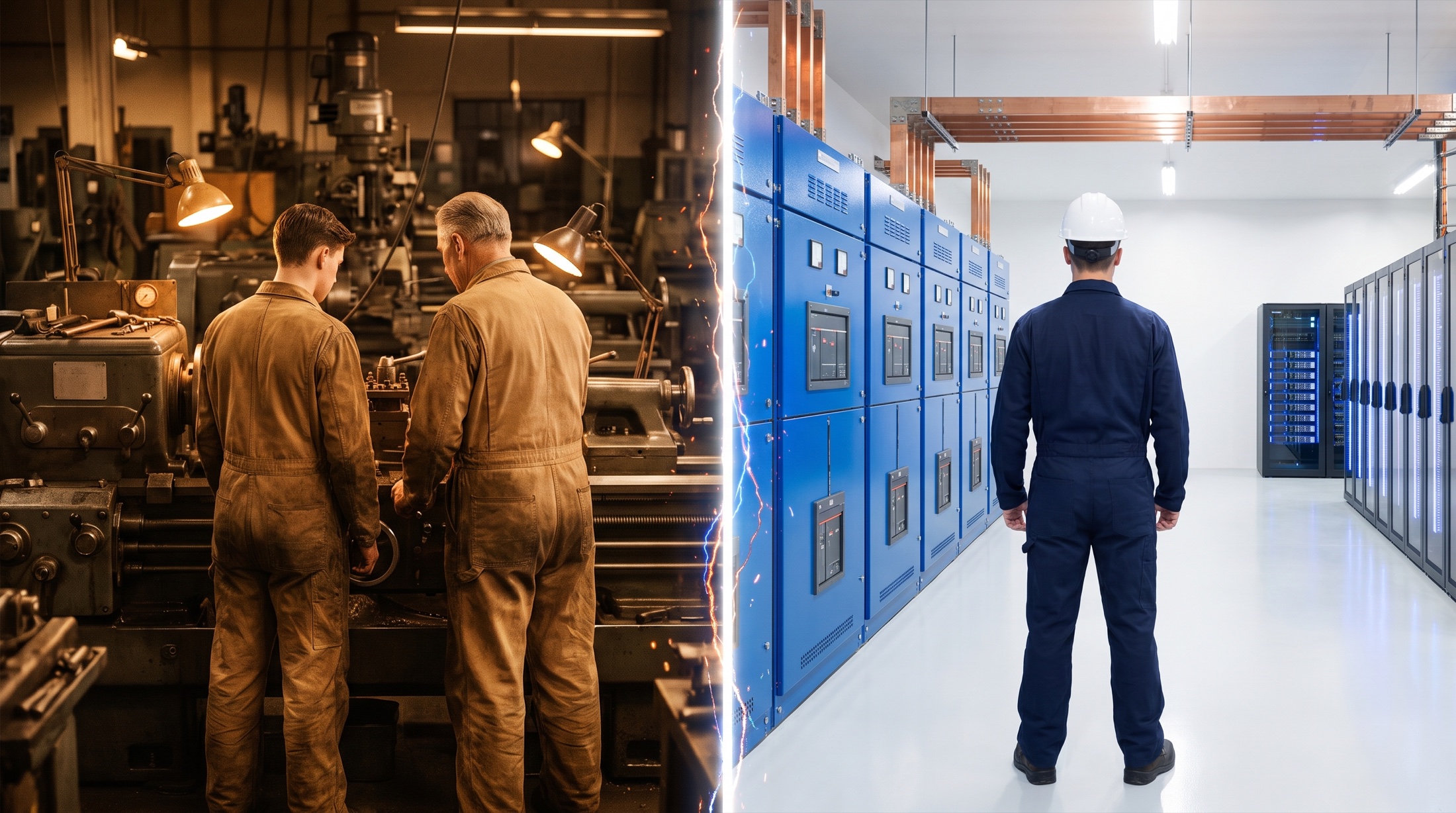
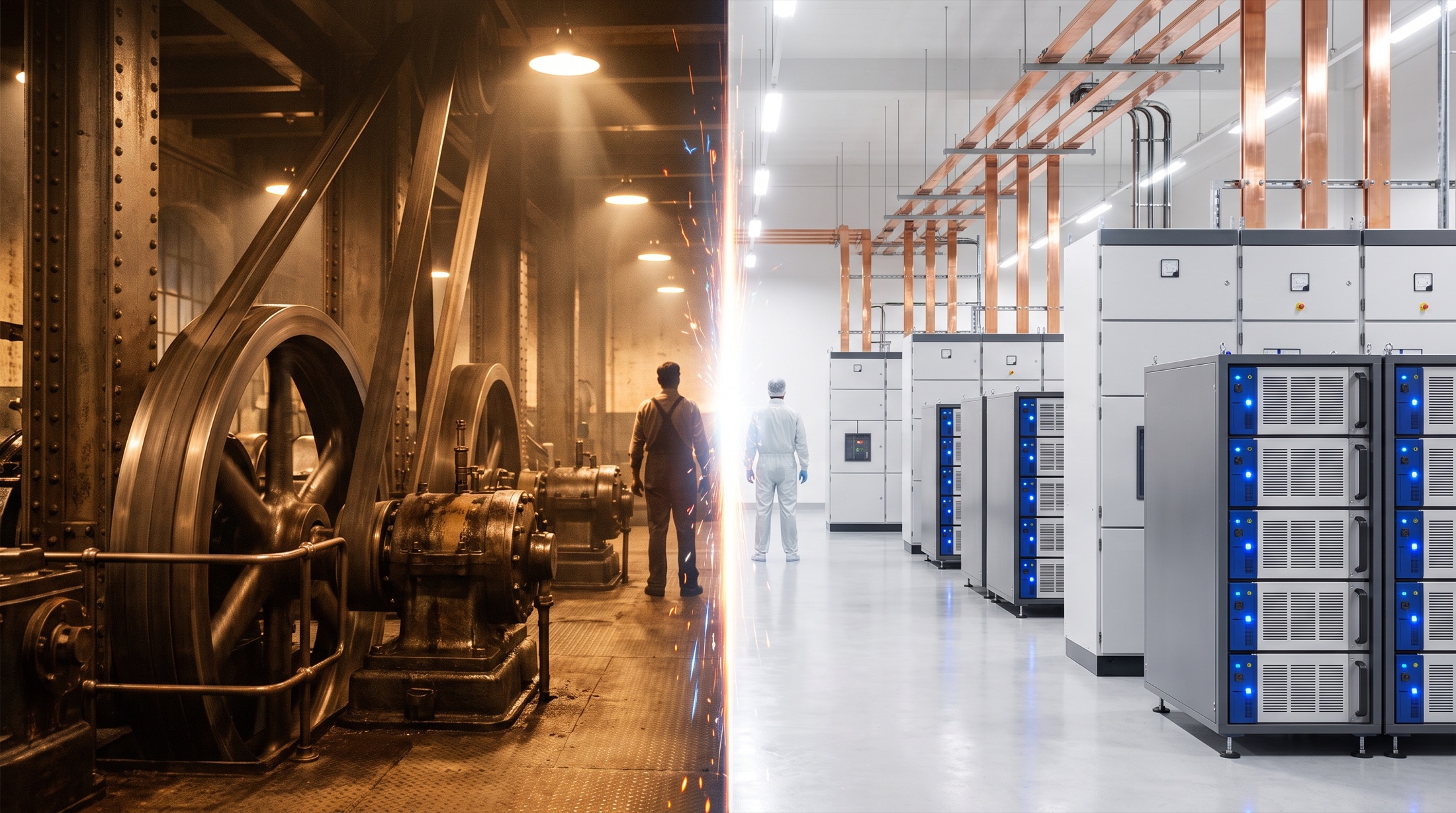
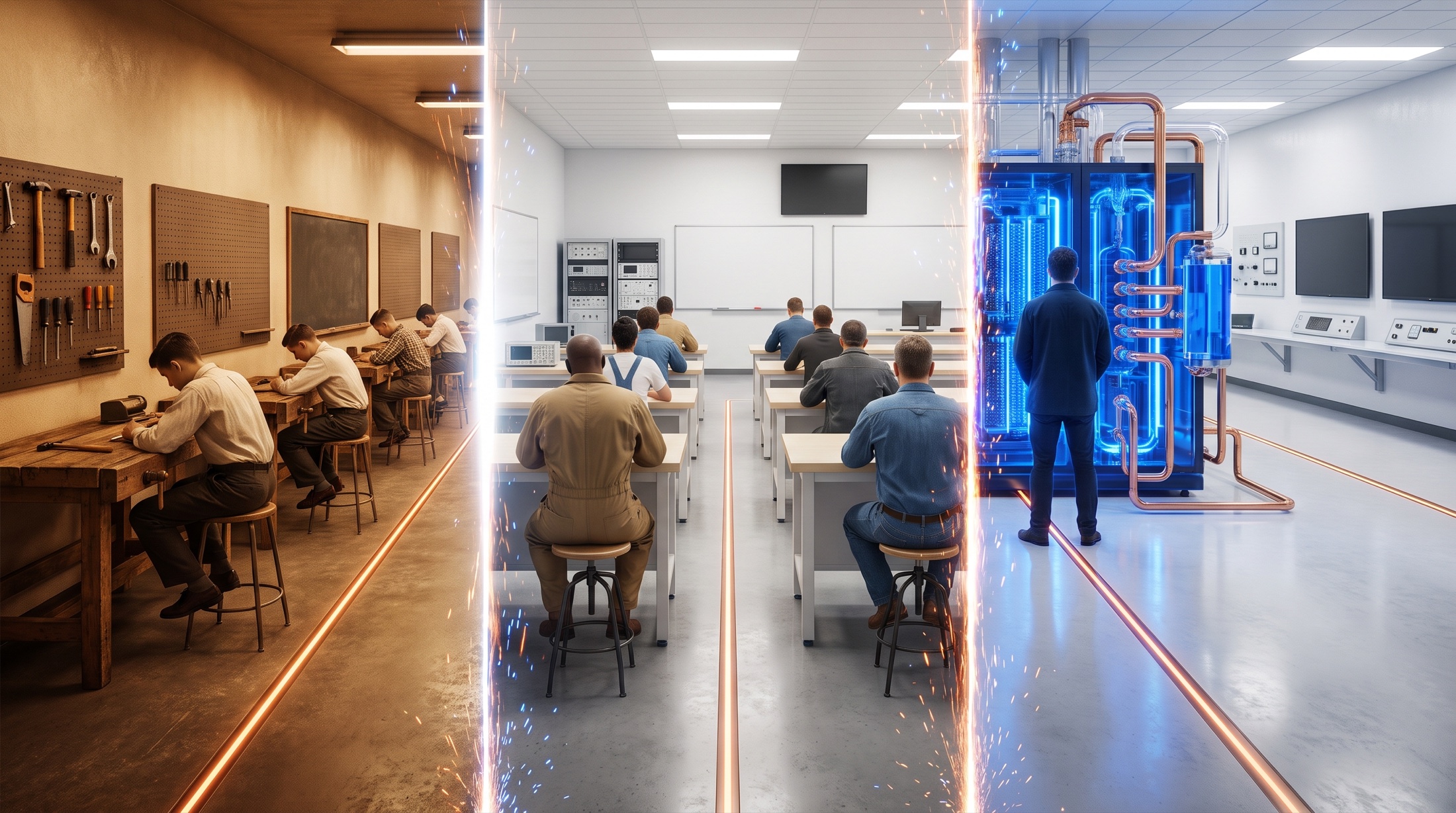
This is the clearest way to see the method working. In almost every case there is a
conventional answer and a better answer, and the tax code has already put its thumb on the better one. We are
not being virtuous. We are reading.
Fuel cells
Firm power made on site, without a combustion turbine.
Solid oxide fuel cells convert fuel to electricity electrochemically rather than by burning it. The campus makes its own power at the point of use, which removes the interconnection queue from the schedule and removes the utility bill from the operating model.
What it means for the community. No combustion means no combustion emissions profile at the fence line, and the plant is quiet. A community gets the jobs and the tax base without the stack.
§48E§45Q§168(k)
Fuel cells are named in the § 48E eligible technology set.
Battery energy storage at medium voltage
BESS on the medium-voltage bus, in place of diesel generators.
A battery energy storage system tied in at medium voltage, typically the same distribution class as the campus bus, carries the load through a power disturbance, meaning a voltage sag or a momentary outage, and keeps the site running through a down event. It also shifts load, firms the on-site generation, and can sell services back to the grid.
What it means for the community. This is the clearest example of an incentive changing what gets built. A diesel generator farm is the conventional answer to a down event: it earns no federal credit, needs fuel stored on site, and has to be test-run on a schedule the neighbors hear. A battery system does the same job, earns the investment credit as standalone storage, and makes no noise. The tax code makes the better neighbor the cheaper option.
§48E (Storage)§168(k)
Energy storage qualifies for § 48E on its own, without being paired to a generator.
Geothermal
Heat from the ground, for power or for cooling.
Geothermal resources can generate electricity where the resource supports it, and ground-source loops can reject heat far more efficiently than air-cooled equipment almost anywhere else.
What it means for the community. A ground loop uses no water to reject heat, which matters in every county where water is the reason a data center gets voted down.
§48E§168(k)
Geothermal is named in the § 48E eligible technology set.
Carbon capture
Capture the CO2 the on-site generation produces.
On-site generation running on natural gas produces a concentrated carbon dioxide stream, which is materially easier and cheaper to capture than dilute flue gas. Captured CO2 goes to secure geologic storage, enhanced recovery, or qualified utilization.
What it means for the community. It is the difference between a project that adds emissions to a county's inventory and one that does not.
§45Q
§ 45Q pays per metric ton for twelve years, and the credit can be taken as cash under § 6417 for the first five.
Heat capture and reuse
The waste heat becomes someone's heating bill, eliminated.
Liquid-cooled compute rejects heat at a temperature that is actually useful. Captured and piped, it can heat the Institute, a community center, a greenhouse, or a municipal building instead of being thrown into the air.
What it means for the community. A data center's waste heat is normally a nuisance. Captured, it is a permanent reduction in a public building's operating cost, and it is the most legible benefit on the whole campus to a resident who does not care about tax law.
§179D
§ 179D rewards the efficiency of the buildings that receive the heat.
Manufacturing on site
Build the components, do not just install them.
Fabricating modules, enclosures, and power components on the campus turns a construction project into a permanent manufacturing employer, and brings a second and separate set of incentives with it.
What it means for the community. Construction jobs end. Manufacturing jobs do not. This is what changes a project from a two-year event into an employer.
§45X§48CTX §151.318CA §6377.1
Manufacturing carries its own production credit and its own state equipment exemptions.
Research and development
The work of making it run better is itself creditable.
Model development, cooling engineering, and control-system work are qualified research. The credit offsets tax, and the expensing provision lets the cost be deducted immediately rather than amortized.
What it means for the community. This is the line that connects the factory to the university. Sponsored research is creditable to the sponsor and career-making for the faculty and graduate students who do it.
§41§174CA R&D
§ 174 immediate expensing was restored, which materially improved the cash timing on research spend.