The F1 Principle
Why the smartest operation beats the biggest engine. A 1.6-liter V6 makes 1,000 horsepower because of what is bolted around it. Displacement is the model. Everything else is the harness.
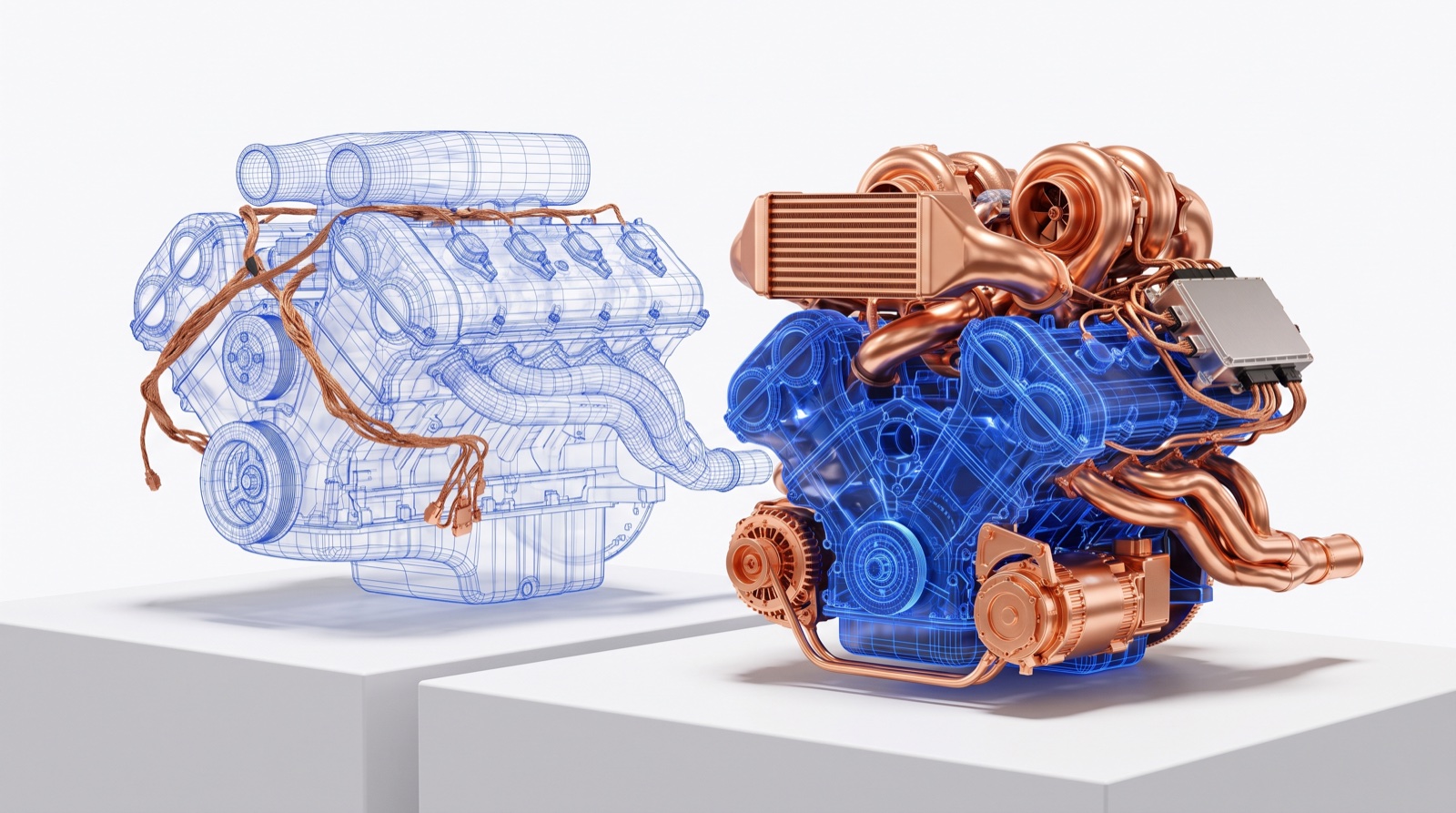
A Formula 1 engine is a 1.6-liter V6. With turbos, hybrid energy recovery, and a control unit written by people who know what they are doing, it makes about 1,000 horsepower. A showroom V8 makes maybe 450. Displacement is the model. Everything bolted around it is the harness. The F1 car does not just win. It laps the V8.
That is the whole thesis. It is also the thesis most of this industry still refuses to accept. So I went and checked the numbers on both sides, the racetrack and the AI factory floor. They hold up.
The numbers behind the analogy
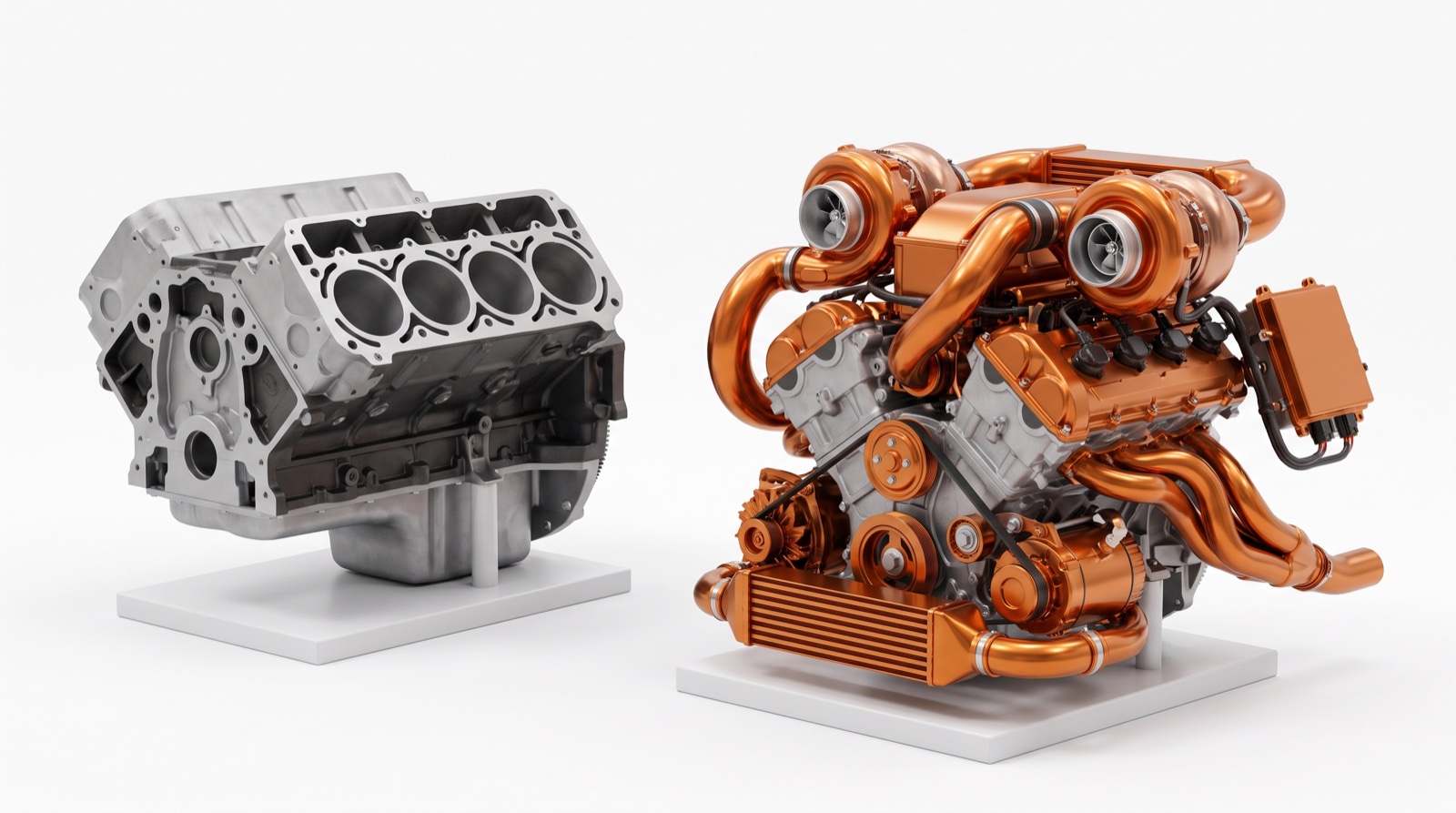
Start with the engine everyone can buy. Ford lists its current 5.0-liter Mustang V8 at 480 horsepower at 7,150 rpm. Five liters, eight cylinders, naturally aspirated, no hybrid system. It is a very good engine. It is also the biggest thing in the car.
Now the F1 power unit. The regulations that ran from 2014 through 2025 built the car around a 1.6-liter turbocharged V6, plus two motor-generator units. One recovered energy from the turbo’s exhaust heat. The other recovered energy under braking and put up to 120 kW back into the drivetrain, 4 megajoules per lap. Combined, the unit produced roughly 1,000 horsepower from a block one-third the size of the Mustang’s.
The 2026 rules keep the same small engine and lean even harder into what surrounds it. Formula 1’s own explainer says the new unit “retains the 1.6-litre turbocharged V6 engine (with a few tweaks) but deletes the MGU-H,” while the electric motor moves to “350kW to the rear wheels, up from 120kW,” and the electrical share of total power moves from “around 20 per cent” to “around 50 per cent” (Formula 1). The combustion side actually gets smaller: the FIA’s technical explainer has the internal combustion engine dropping “from between 550-560kW to 400kW,” with recovery rising to around 8.5 megajoules per lap (FIA via Formula 1). And the total? Formula 1 says the 2026 units “will still provide over 1,000 horsepower” (Formula 1).
Read that again. The sport made the engine weaker on purpose and kept the horsepower by making the harness stronger. That is not a metaphor I invented for AI. That is the published regulation.
One more number, because it is the one that matters most. Mercedes AMG High Performance Powertrains reports its F1 unit “reaching more than 50% thermal efficiency” (Mercedes-AMG Petronas F1). When Mercedes first broke that barrier on the dyno in 2017, the 2014 unit had been at 44 percent (Autosport). A typical road-car engine turns roughly 35 percent of its fuel into motion (Motor Authority). The rest is heat. The F1 harness recovers heat the V8 throws away.
That is the F1 principle in one sentence: the win comes from the fraction of the input you turn into delivered work, and that fraction is set by the harness, not the block.
Displacement is not the answer
Every quarter, someone announces a bigger engine. More parameters. More GPUs. A larger training run. A taller building. A denser rack. Bigger numbers in the press release, bigger checks to the vendor, and, reliably, the same operational outcome.
The bigger V8 is not slow because the engineers were lazy. It is slow because raw displacement is a bad proxy for delivered work. Torque at the crank does not equal lap time. Parameters do not equal enterprise value. Nameplate megawatts do not equal delivered tokens. A gigawatt campus running an unoptimized workload against a mispriced tariff loses to a 40 MW campus that knows exactly what it is doing.
The V8 buyer thinks they bought performance. They bought a spec sheet.
Here is where the AI research and the racing data say the same thing. On the GAIA agent benchmark, the same model, Claude Sonnet 4.5, scores 30.91% in one scaffold and 74.55% in another (Princeton HAL). Same block. Different harness. Forty-three points. A 2026 paper that held the model fixed and changed only the scaffold found the same pattern across benchmarks and concluded that “harness-induced variance can substantially exceed model-induced variance” (arXiv 2605.23950). Meanwhile the engines themselves are converging: Stanford’s AI Index measured the gap between the best closed model and the best open-weight model at 8.04% in January 2024 and 1.70% by February 2025 (Stanford HAI). Everyone is running the same displacement. The lap times are not the same.
The harness is where the race is won
An F1 car wins because of what surrounds the engine.
Turbocharging recovers energy that would have gone out the exhaust. The motor-generator units recover braking energy back into the drivetrain. The control unit manages fuel mix, boost, torque delivery and energy deployment against live telemetry. Mercedes says its car carries “over 250 sensors” and produces about “30 megabytes per lap,” more than a terabyte per car per weekend, over 17 separate data buses (Mercedes-AMG Petronas F1). AWS, which runs F1’s data platform, puts it at 300 sensors per car “generating more than 1.1 million data points per second” (AWS).
The strategy is not improvised either. F1’s own insiders’ guide has a strategist explaining that “Strategy is 98 per cent preparation,” that the simulations run on Saturday night, and that “Everything is based on statistics” (Formula 1). Ruth Buscombe, a race strategist, describes it plainly: “We run millions of simulations. We have Monte Carlo, we have gen AI applications” (AWS Executive Insights).
And the pit crew rehearses until the stop is muscle memory. The record is 1.80 seconds, set by McLaren at the Qatar Grand Prix on October 8, 2023 (Guinness World Records). Four tires, under two seconds, on a live track. Nothing on the car is generic, and nothing about the operation is left to talent alone.
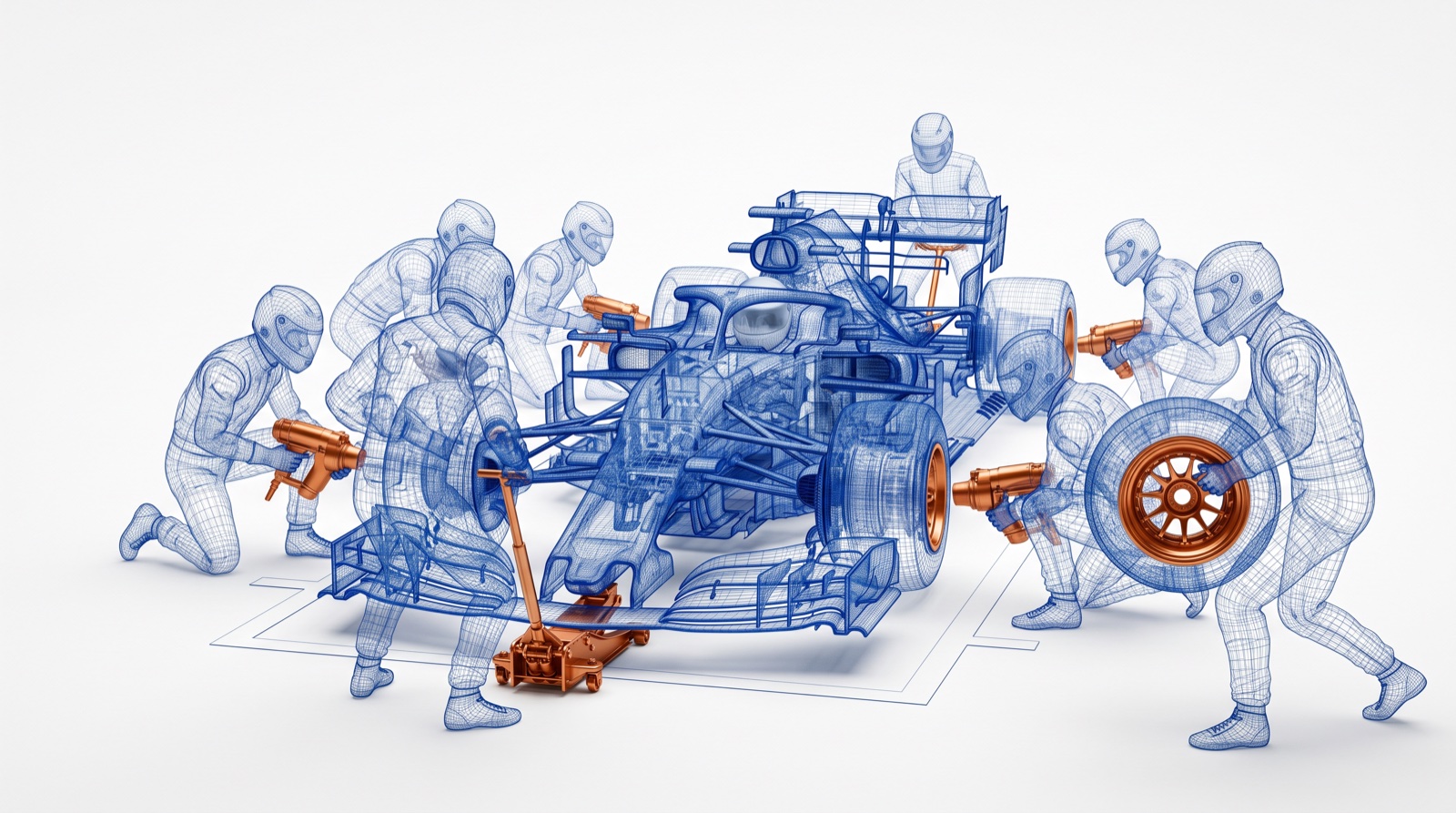
That is a harness. And the harness is the operation.
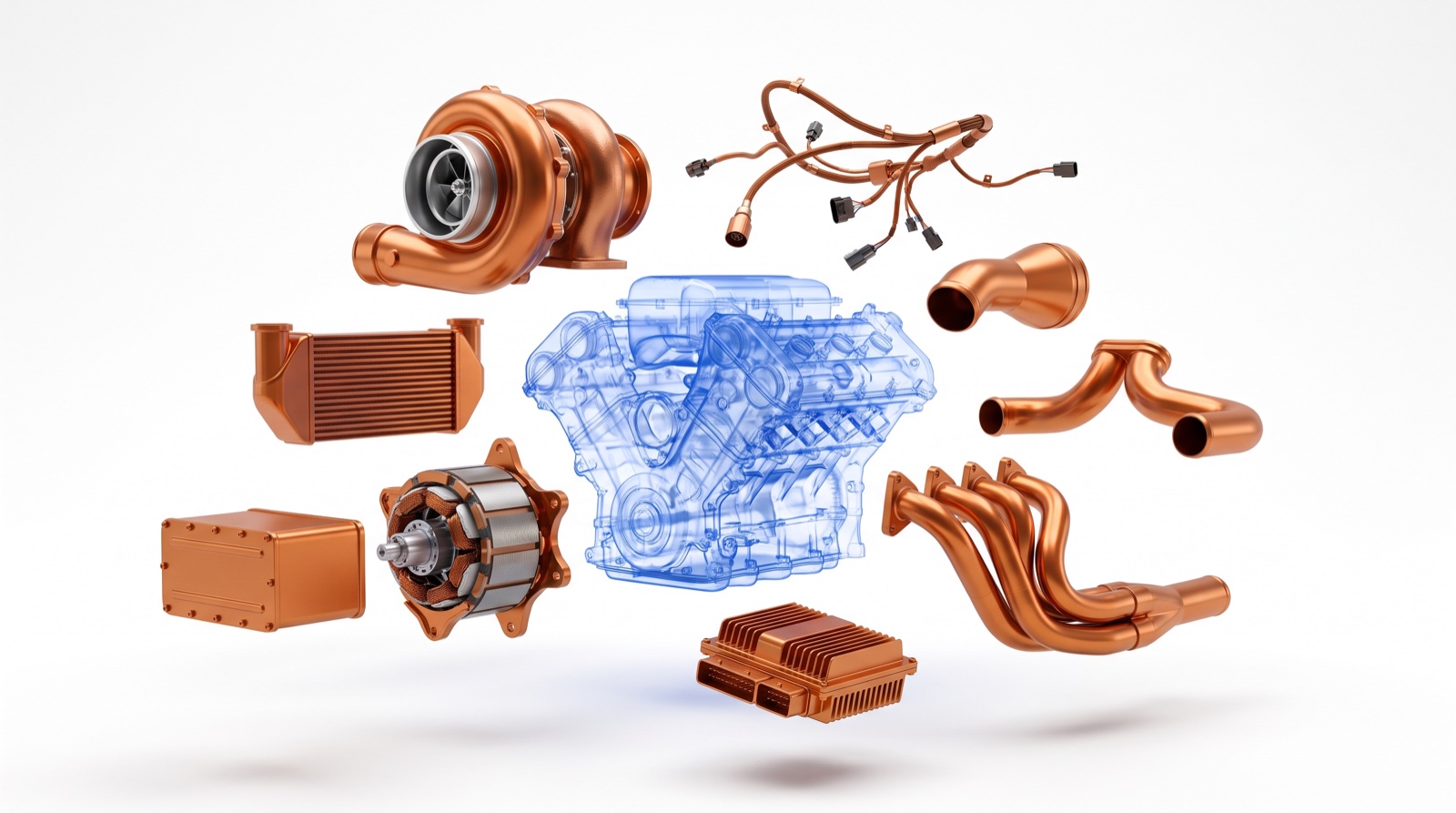
Take that same discipline off the racetrack and drop it onto an AI factory floor and the parallels are exact:
- The model is the engine. It is a commodity input. Everyone can buy one.
- The scaffold, meaning the agent loop, the tool router, the memory layer, the evaluation harness, is the control unit. It decides what the engine actually does in a given lap.
- The power stack, meaning the tariff structure, the load-shifting behavior, the on-site generation, the storage arbitrage, is energy recovery. It is where lost work gets pulled back into the drivetrain.
- The operating team, meaning the runbooks, the escalation ladders, the change control, the observability discipline, is the pit crew. Rehearsed, measured, and boring on purpose.
- The site strategy, meaning the interconnection, the water balance, the community agreement, the tax stack, is the aero package. It is retuned per circuit, not copied from the last one.
Everything bolted around the engine is where the win comes from. The engine is table stakes.
What the V8 operators are actually buying
A V8 shop buys a bigger model, plugs it into a generic API, ships a chatbot, and reports the parameter count in the board deck. They confuse displacement with delivery. They benchmark their competitors on the same axis they benchmark themselves, model size, GPU count, headline megawatts, and mistake shared vocabulary for shared strategy.
The survey data shows what that looks like at scale. LangChain’s State of Agent Engineering found 94% of teams have observability tooling and only 77.2% actually evaluate their agents’ output (LangChain). That is a garage full of telemetry screens and nobody reading the lap times. McKinsey reports that more than two-thirds of high-performing companies name data, not the model, as the primary obstacle to scaling AI (McKinsey). Nobody in that sample is short on displacement.
The F1 shop looks at the same model and asks a different question. Not “how big is it,” but: what fraction of its capability is our harness actually extracting, what is the delivered cost per unit of useful work, and where in the loop is the energy being wasted. That is a different operating discipline, and it produces a different P&L.
The gap is not intelligence. It is not capital. It is not access to the frontier engine; everyone has that now. The gap is the harness.
Detailed plans win. Big plans lose.
The F1 principle is not a slogan about being scrappy. F1 teams are not small. They are large, well-funded, and technically ambitious. What they are not is undisciplined. Every gram of the car is accounted for. Every lap is telemetered. Every stop is timed. Every strategy call is modeled against alternatives before the lights go out.
The biggest company in a category rarely wins the lap. The most detailed plan does. The team that has decomposed the workload into its energy, compute, tool, and human components, priced each one against real numbers, and rehearsed the handoffs between them is the team that laps the V8 in the same category, on the same fuel, with a smaller engine.
Efficient operations do not mean cheap operations. They mean intentional operations. Every component sized to its actual job. Every unit of input tracked to a unit of delivered output. Every decision reviewed against a benchmark that reflects real work, not vendor telemetry.
Anthropic, which sells one of the engines, said the quiet part in its own engineering guidance: the most successful agent builders “weren’t using complex frameworks or specialized libraries. Instead, they were building with simple, composable patterns” (Anthropic). Simon Willison’s definition of a coding agent is even shorter: “LLM + system prompt + tools in a loop” (Simon Willison). Count the parts. Three of the four are the harness, and the buyer owns them.
The next twelve months
The frontier engines are converging. The gap between the strongest closed-weight model and the strongest open-weight model has already closed to a rounding error on Chatbot Arena. Inference costs at a given capability tier have collapsed by more than two orders of magnitude in about twenty-four months, a 280-fold drop at GPT-3.5-level performance by Stanford’s count. That trend is not slowing.
If your competitive advantage is displacement, that advantage has a shelf life measured in months.
If your competitive advantage is the harness, the scaffold, the power stack, the operating discipline, the site strategy, the detailed plan, that advantage compounds. Every lap makes the pit crew faster. Every telemetry cycle makes the control unit smarter. Every retuned circuit makes the aero package more specific. The engine is the same engine everyone else is running. The lap time is not.
This is the argument I make at length, with the receipts, in The Price of Intelligence. It is why we build the SAVRN agent workforce as a harness first and treat the model as a substitutable input. And it is why our own Data Center Moratorium Tracker reads like an aero-package brief: the site is a circuit, and it is different every time.
Build the harness. The V8 shops are still shopping for displacement. Lap them.
Want the next one?
When a new piece publishes on SAVRN Insights, you get one email with what it covers and a link to read it. No digests, no promotions.
One email when it publishes. Unsubscribe in one click. Privacy
Frequently asked questions
What is the F1 Principle?
The observation that a Formula 1 power unit, a 1.6-liter V6, makes about 1,000 horsepower because of everything bolted around it: turbocharging, hybrid energy recovery, a control unit run on live telemetry, and a rehearsed operation. A showroom V8 with three times the displacement makes about 480. Applied to AI, displacement is the model and the harness is everything around it.
How much power does an F1 engine actually make?
Formula 1 states the 2026 power units “will still provide over 1,000 horsepower” from a 1.6-liter turbocharged V6 hybrid. Under the 2014 to 2025 rules the electric motor added up to 120 kW; under the 2026 rules that rises to 350 kW, roughly half of total power.
What changed in the 2026 F1 power unit rules?
The MGU-H was removed, the MGU-K was raised from 120 kW to 350 kW, the electrical share of power moved from about 20 percent to about 50 percent, the combustion engine’s output was reduced from roughly 550 to 560 kW to 400 kW, and the cars run fully sustainable fuel. Total output stayed above 1,000 horsepower.
How efficient is an F1 engine compared with a road car?
Mercedes AMG High Performance Powertrains reports its F1 unit exceeding 50 percent thermal efficiency, a barrier it first broke on the dyno in 2017. Typical road-car engines run around 35 percent. The difference is energy recovery: the F1 harness captures heat and braking energy the road engine throws away.
What is the fastest F1 pit stop ever?
1.80 seconds, set by McLaren at the Qatar Grand Prix on October 8, 2023, as recorded by Guinness World Records.
How much data does an F1 car generate?
Mercedes cites over 250 sensors and about 30 megabytes per lap, more than a terabyte per car per race weekend. AWS, which runs F1’s data platform, cites 300 sensors generating more than 1.1 million data points per second.
What is an AI "harness"?
Everything around the model: the agent loop, tools, memory, context, evaluation, guardrails, and the enterprise data behind it. Simon Willison’s definition of a coding agent is “LLM + system prompt + tools in a loop.” The model is one of four parts. The buyer builds and owns the other three.
Is there evidence the harness matters more than the model?
Yes. On the GAIA agent benchmark the same model scores 30.91% in one scaffold and 74.55% in another. A 2026 study that held models fixed and varied only the scaffold concluded that harness-induced variance can substantially exceed model-induced variance.
Are AI models really converging?
Stanford’s AI Index measured the gap between the best closed and best open-weight model at 8.04% in January 2024 and 1.70% by February 2025. Epoch AI puts the open-weight lag at roughly four months. Inference cost at a fixed capability fell about 280-fold between November 2022 and October 2024.
How does SAVRN apply the F1 Principle?
We treat the model as substitutable inference capacity and put the engineering into the harness: the agent operating system, evaluation, memory, the power stack, the operating discipline, and a site strategy retuned for every community. The long-form version, with sources, is The Price of Intelligence.