From Site to First Token: The AI Deployment Timeline
Grid-tied, an AI campus waits years in the interconnection queue before construction even starts. Here's how owning the power gets you to first token in months — and leaves the town's grid untouched.
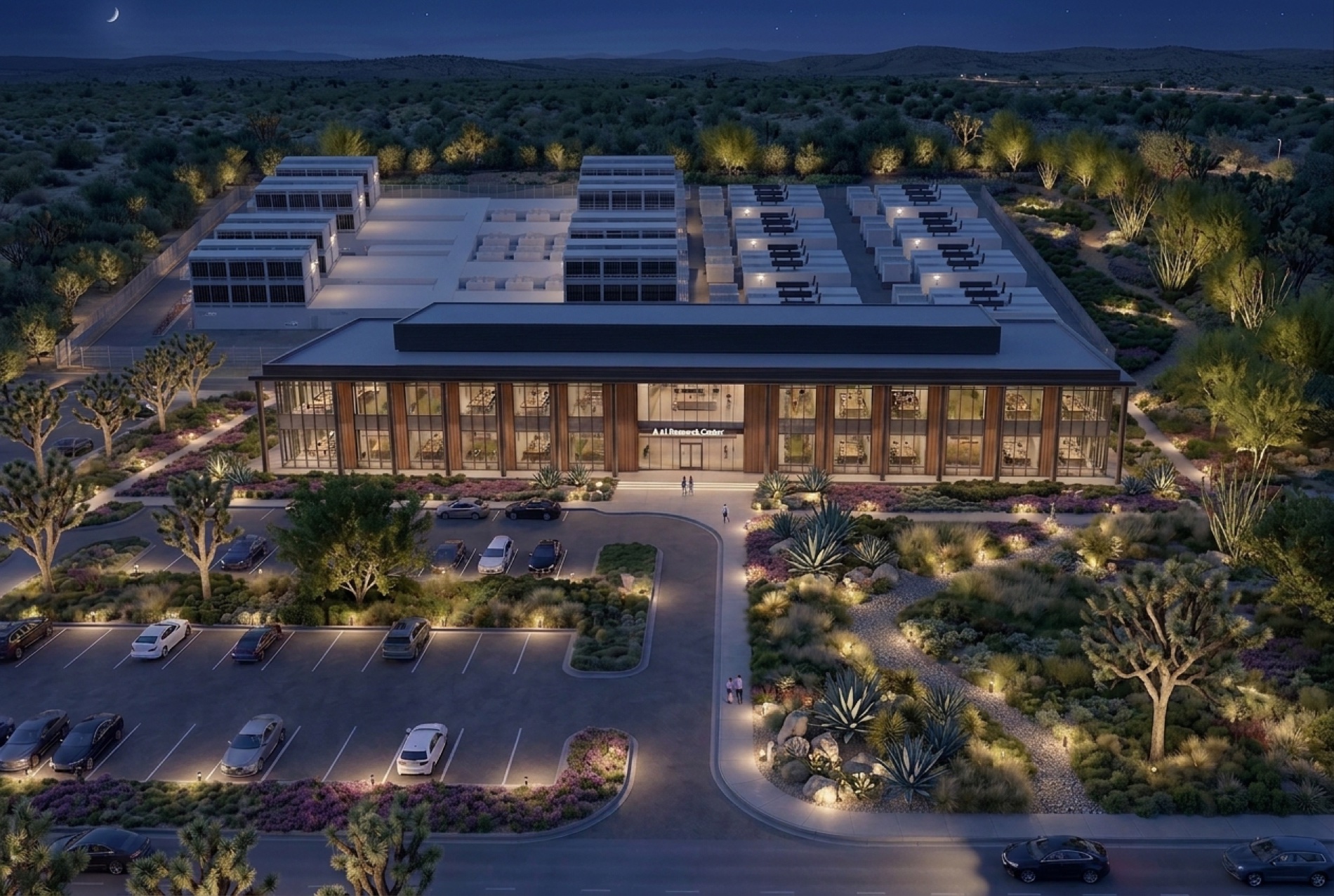
The AI infrastructure deployment timeline has quietly become the deciding constraint of every AI strategy. Plan a campus around grid-tied power and the strategy is already lost, because the wait alone outruns the technology. The median U.S. interconnection wait now exceeds five years, and applicants in the largest queues face waits stretching toward twelve, per Grid Strategies’ national grid-load analysis. Worse, roughly four in five queued projects withdraw rather than absorb the delay. The buyer who needs AI capacity in 2026 cannot wait until 2031.
So the timeline is the whole game, and this is how we collapse it. By generating power on site, building the compute blocks on a line, and running every workstream in parallel, a SAVRN campus reaches its first token in 6 to 12 months instead of the better part of a decade.
Every figure here is sourced in full on our deployment-timeline research page.
Why the grid-tied timeline runs to years
A grid-tied build is slow in two stages that stack on each other. First, the interconnection queue: before construction can even be financed with confidence, the project waits for grid studies and upgrades that now take years, and Americans for a Clean Energy Grid’s analysis shows the queues growing faster than reform can clear them. Second, construction: industry-standard hyperscale building runs 24 to 48 months on top of the wait. Add them and the calendar runs to roughly seven years — long enough that the compute hardware a buyer specifies today is several generations obsolete before the campus opens. And the delay compounds: every quarter a campus spends waiting is a quarter of capital that earns nothing while demand and prices move on. In a market this fast, a timeline measured in years is not a schedule; it is a way to arrive too late to matter.
How we compress it
The compression is not a trick; it is removing the two long poles and parallelizing the rest. Because we generate power on the campus, the interconnection queue — the single longest item — is removed entirely rather than shortened. Regulators are working to speed that queue, and FERC’s interconnection reforms will help over time, but owning the generation skips the line today. Meanwhile, the liquid-cooled blocks are manufactured on a line in Fort Worth while the site is prepared, so construction and fabrication run at once rather than in sequence. What is left is months, not years.
The phases, start to first token
The sequence is short because the slow parts are gone. First, site qualification and power contracting — confirm the land and the generation before anything else moves. Second, manufacturing — build the pods and the power-and-cooling skids on the line while the site is prepared. Third, assembly and commissioning — set the modular blocks, connect power and cooling, and test under load. Finally, token-bearing operation — the campus begins converting watts into billable tokens, which is the only milestone that was ever the point. Notably, none of these phases is novel — the speed comes entirely from removing the wait that used to sit in front of them.
The speed argument is the ownership argument
Here is the part most timelines miss. The reason a SAVRN campus is fast is the same reason it is a good neighbor: we own the power. Because we generate on site, we skip the queue — and because we skip the queue by islanding from the grid, we never draw the town’s capacity to do it. The town’s grid, its rates, and its queue position are untouched by our arrival. Speed and good-neighbor design are not two strategies here; they are the same decision. A grid-tied build is slow precisely because it is fighting the community for the same scarce grid. We do not fight for it; we bring our own.
Why it matters to me
I have watched a fully-financed project sit for years waiting on a grid that could not connect it. That is a waste I refuse to build into our model. My grandparents taught me to give more than you take, and the fastest way to take nothing a community needs is to never reach for its grid in the first place — which is exactly why our campuses are quick and welcome at the same time. See how the systems fit in the AI factory playbook, or read our other field notes.
Frequently asked questions
How long does an AI infrastructure deployment timeline really take?
Grid-tied, it runs to roughly seven years — years in the interconnection queue plus 24 to 48 months of construction. By contrast, an owned campus with on-site power reaches first tokens in 6 to 12 months, because the queue is removed and the build runs in parallel.
Why is the interconnection queue the longest part?
Because grid studies and the upgrades they trigger take years, and demand is entering the queue faster than it clears. Therefore the wait for permission to connect, not the construction itself, is what makes a grid-tied timeline measured in years.
Does on-site power really remove the queue, or just shorten it?
It removes it. Because the campus generates and islands its own power, there is no interconnection request to wait on at all. That is the single biggest reason the timeline collapses from years to months.
What happens to my hardware choice during a long timeline?
It ages out. Notably, a build that opens five-plus years after you specify the hardware will commission compute that is several generations behind — which is why a slow timeline is a hidden cost, not just an inconvenience.
Can construction and manufacturing really run at the same time?
Yes, and that concurrency is most of the speed. While the site is prepared, the blocks are built on a line; while power is brought up, cooling is commissioned. Consequently, work that a conventional build does in sequence, we do in parallel.
Does a faster timeline mean cutting corners?
No. The speed comes from removing the queue and parallelizing the build, not from skipping engineering. In fact, factory-built blocks are tested under controlled conditions before they ever reach the site, which improves quality rather than trading it away.
How does deployment speed affect the economics?
Directly. Because capital only earns once the campus runs, a build that opens years sooner amortizes the same capital across far more revenue. As a result, time-to-first-token belongs in the financial model, not beside it.
What does the buyer need ready to start?
A site with power available, a workload profile, and clarity on compliance needs. Importantly, the more of the power picture that is settled up front, the faster qualification moves — which is why we pre-identify sites where generation is already lined up.
Will grid reform eventually make grid-tied builds fast again?
Reform helps, but slowly, and demand is outrunning it. Therefore for a buyer who needs capacity now, owning the generation is the only reliable way to escape the queue, regardless of how reform progresses.
Does building fast strain the host community?
The opposite. Because the speed comes from islanding our own power rather than tapping the grid, the community’s electricity is untouched — the fast campus and the good-neighbor campus are the same campus.