Modular AI Campus: How 6 Months Beats Hyperscale Builds
A hyperscale build takes four years. A modular AI campus ships in six months — factory-built blocks, on-site power, concurrent commissioning — and it's the right size for a real town.
A modular AI campus is what you build when you cannot wait four years for compute. A conventional hyperscale build still runs 24 to 48 months from groundbreak to first token, and the grid queue alone runs years on top of that. The modular model collapses that window to 6 to 12 months by manufacturing the compute block in a factory, generating the power on site, and running every workstream at once instead of in sequence. So this is the engineering of that compression — what gets prefabricated, what gets eliminated, and where the model wins.
The pressure behind it is real. CreditSights tracks hyperscaler capital spending climbing into the hundreds of billions, while Omdia’s data-center market analysis shows operators straining against power and supply limits. When demand is vertical and the conventional build is measured in years, the architecture that ships in months is not a convenience. It is the difference between catching the demand and missing it.
Every figure here is sourced in full on our modular-campus research page.
The 48-month problem
A hyperscale build is slow for three structural reasons, and they stack. First, permitting front-loads the schedule before a shovel moves. Second, grid interconnection sits squarely on the critical path, and that queue now runs years. Third, stick-built construction is sequential by nature — you cannot pour the floor, set the racks, and run the cooling at the same time. Add them up and the calendar runs to four years, most of it spent waiting rather than building.
What a modular campus actually is
A modular campus replaces the job site with a factory. Specifically, the compute block — power, compute, and liquid cooling unified into one unit — is built on a manufacturing line, the same way the Open Compute Project standardizes data-center hardware, then delivered and set rather than assembled in place. Because the block arrives as a tested unit sized for AI rack density, the slow, sequential, weather-exposed part of the build largely disappears.
Where the time actually goes
The compression comes from concurrency, not corner-cutting. While the site is prepared, the block is being manufactured; while the power is brought up, the cooling is commissioned. Therefore workstreams that a conventional build runs one after another, a modular build runs in parallel. And because the power is generated on site, the single longest line item — the interconnection queue — is removed entirely rather than shortened. That is where the years go.
Modular vs hyperscale, told straight
Modular is not a smaller hyperscale; it is a different architecture for a different job. It wins decisively on speed to first token, on incremental capital that layers to demand, on owned on-site power, and on the ability to put compute where it is actually needed rather than where a single mega-site will fit. However, hyperscale still makes sense for one case: a single operator filling more than a gigawatt behind one fence for its own portfolio, where the scale economics of one enormous site outweigh the speed and distribution of many smaller ones. For nearly everyone else — enterprises, institutions, regulated and regional buyers — the modular campus is the better fit.
The objections, answered
Three objections come up, and each has a clean answer. On density, a factory-built block is engineered for frontier rack power from the start, so it meets training and inference density, not a watered-down version. On operational scale, a fleet of standardized blocks is easier to operate and refresh than a bespoke mega-site, because every unit is the same. On lock-in, owning the campus is the opposite of lock-in — the buyer holds the asset, the power, and the data, rather than renting them on a vendor’s terms.
Why modular is the community model
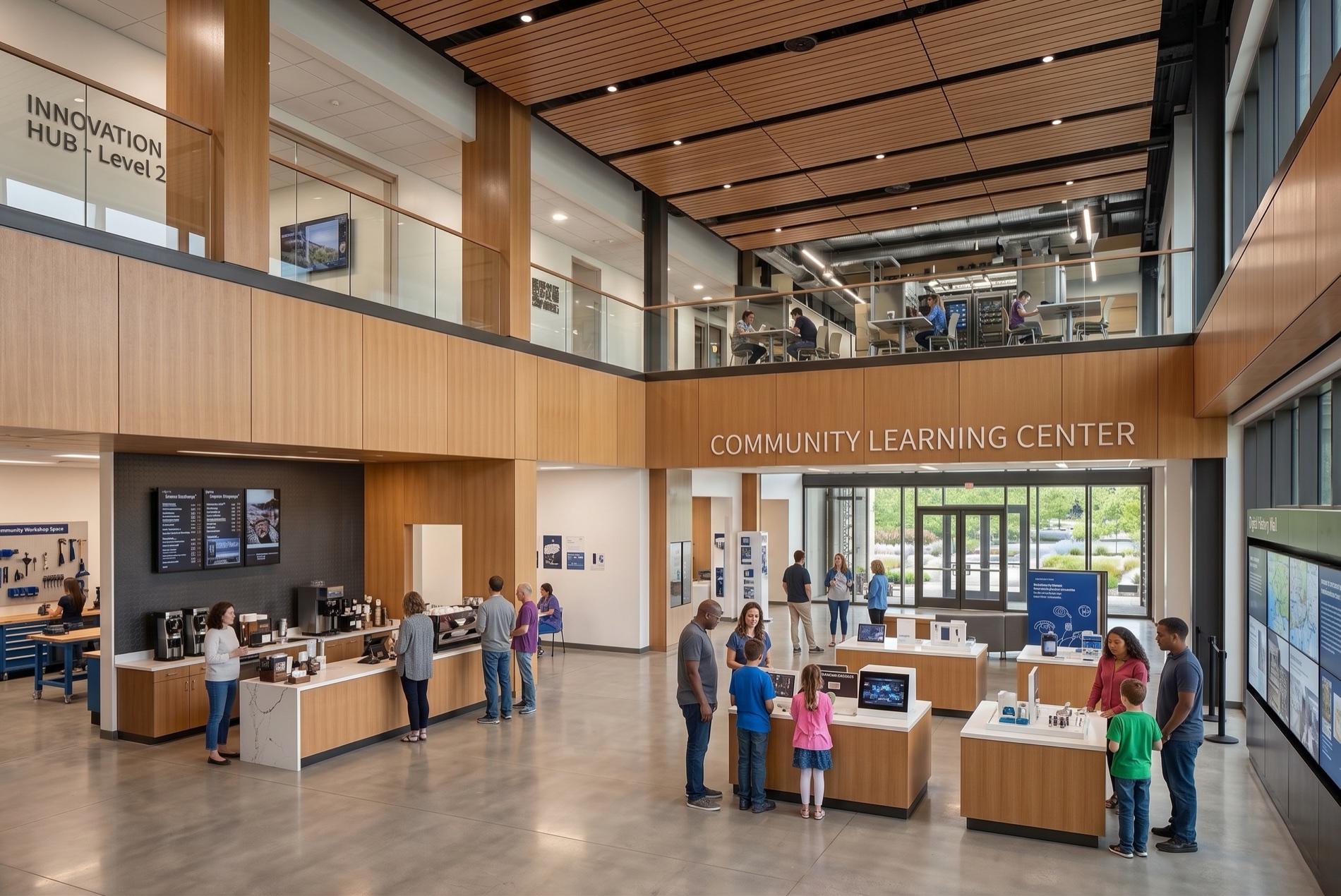
Here is the part that makes this more than an engineering choice. A modular campus is right-sized — tens of megawatts, not a thousand — which means it can land in a real community rather than only in a remote desert tract that can swallow a gigawatt. That changes everything about what the build means to the place that hosts it. The power is generated on site, so the town’s grid is untouched. The cooling loop is closed, so the town’s water is untouched. The blocks are built domestically, so the dollars become local jobs, and the campus carries a training institute that teaches the town to run it. Build one giant fenced site and a community gets a substation and a tax note. Build a right-sized campus the modular way and a community gets work, training, and infrastructure it can be proud of. My grandparents taught me to give more than you take, and the modular campus is that rule rendered in steel you can actually put next to people. See how the pieces fit in the AI factory playbook, or read our other field notes.
Frequently asked questions
How does a modular AI campus avoid the grid interconnection queue?
By generating its own power on site and islanding from the grid. Consequently, the longest line item in a conventional build — the multi-year interconnection study — is removed rather than shortened, which is most of the time savings.
What size is a typical modular AI campus?
Tens of megawatts per campus, scaled by adding blocks. Notably, that right-sized footprint is what lets it sit near a regional population center instead of requiring a remote gigawatt-scale tract.
Is a modular campus more expensive than a hyperscale build?
Not on the measure that matters. Per-megawatt sticker can run higher, but because it ships years sooner and amortizes capital across far more revenue, the owned modular campus usually wins on total cost over its life.
Can a modular campus handle frontier AI density?
Yes. Because the block is engineered for high rack power and liquid cooling from the foundation, it meets training and inference densities — it is not a low-density compromise.
Can it support classified or air-gapped workloads?
Yes. Because the campus is self-powered and self-contained, it can operate independent of public infrastructure, which is exactly what air-gapped and defense workloads require.
How does a modular campus handle hardware refresh?
By treating the block as the refreshable layer over a durable power-and-cooling envelope. Therefore a refresh is a block-level swap rather than a teardown, which protects the capital that is hardest to replace.
Where can a modular campus be deployed?
Far more places than a hyperscale site, because its smaller power and water footprint fits sites a gigawatt build never could. As a result, compute can be placed near the users and communities it serves.
Can the modular model scale to gigawatt total capacity?
Yes, by fielding many campuses rather than one fence. Importantly, that distributed scale is an advantage for latency-sensitive workloads, not a limitation, because the capacity sits closer to demand.
Who should not buy a modular campus?
A single hyperscaler filling more than a gigawatt behind one fence for its own portfolio, where one mega-site’s scale economics win. For essentially every other buyer, the modular campus fits better.
How fast can a modular campus realistically come online?
Six to twelve months to token-bearing operation, because manufacturing, site work, and power all advance in parallel. By contrast, the conventional build it replaces still runs 24 to 48 months.