Give more than you take
A lesson my grandparents taught me — and the reason an AI factory should leave a community better than it found it.
My grandparents taught me something simple. In a community, you give more than you take. Eighty years later, I find myself applying that same rule to the least sentimental thing imaginable — how we build an AI factory. Live by the rule and the community carries you; break it, and it never forgets.
A kitchen in Rockdale, Texas
In 2019, I packed my bags and moved to Rockdale, Texas with three other guys. We had almost nothing figured out. However, we stood around a kitchen for hours and talked about how we were going to change the way people saw the Bitcoin industry. By then Rockdale was a mining town, and the industry carried a reputation. Specifically, it showed up, drew enormous power, and gave the community very little reason to be glad it came.
We wanted to be the exception. Because we believed you could build something demanding — something that runs hot and hungry — and still be a good neighbor, we built it that way. And that one belief changed everything that came after.
Seven years later, the same question
Seven years later, I am sitting in my office asking a bigger version of that same question. Now the technology is not Bitcoin; it is artificial intelligence. Yet the real question has not changed at all. How do we change the way people think about technology and the oldest values of this country at the same time?
Those values are not complicated. For example, my grandparents’ generation taught us not to strip a place of its precious resources. Moreover, they taught us to help one another, and to leave the land and the people better than we found them. In fact, they understood something we keep forgetting. When everyone becomes a better steward of the community, the whole community does better.
My grandparents taught me that in a community, you have to give more than you take. Those principles don’t stop with AI.
The principles don’t stop with AI
Here is what I have come to believe. Those principles do not stop at the edge of a new technology. Rather, it is the responsibility of a company to carry them forward — to translate them into whatever the world builds next. AI is simply the newest test of a very old idea.
But there is a catch. A company can only do this if its founders actually believe it. You cannot bolt these values on later as a campaign. Therefore the conviction has to start at the top, and it has to be real. Notably, that is exactly where nearly everyone falls short.
Nobody is making this their mission
Here is what almost no one does. Across this industry, giving back gets treated as a cost to minimize — offered late, then quietly clawed back. Consequently, it stays thin and temporary, because it was never the point.
I think that is backwards. Giving more than you take should not be the concession you make to get a project approved. Instead, it should be the core mission of the company itself. As far as I can tell, not a single company in this space has taken that position and truly meant it. So we will.
What “give more than you take” actually looks like
None of this matters if it stays a feeling. So we engineered it into the campus itself.
First, we take nothing the community needs. The AI factory makes its own electricity — renewable baseload, solar, and storage, islanded from the public grid — so local rates, lights, and capacity are untouched. Furthermore, it draws zero municipal water, because the cooling loop is sealed and the heat is captured and reused. By comparison, Lawrence Berkeley National Laboratory found U.S. data centers consumed roughly 17 billion gallons of water for cooling in a single year. We refuse to add to that number.
Then we give back what a community can’t build alone
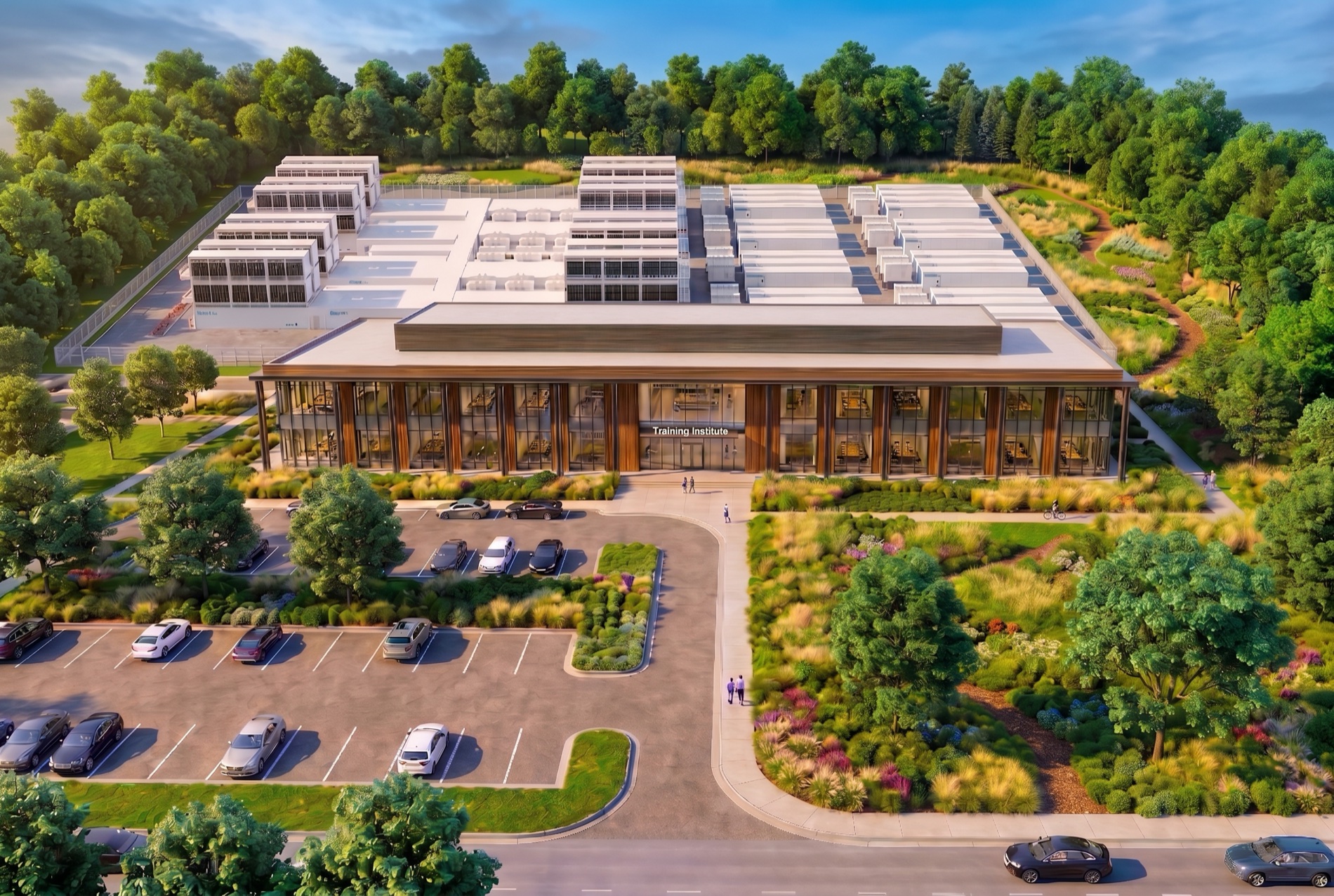
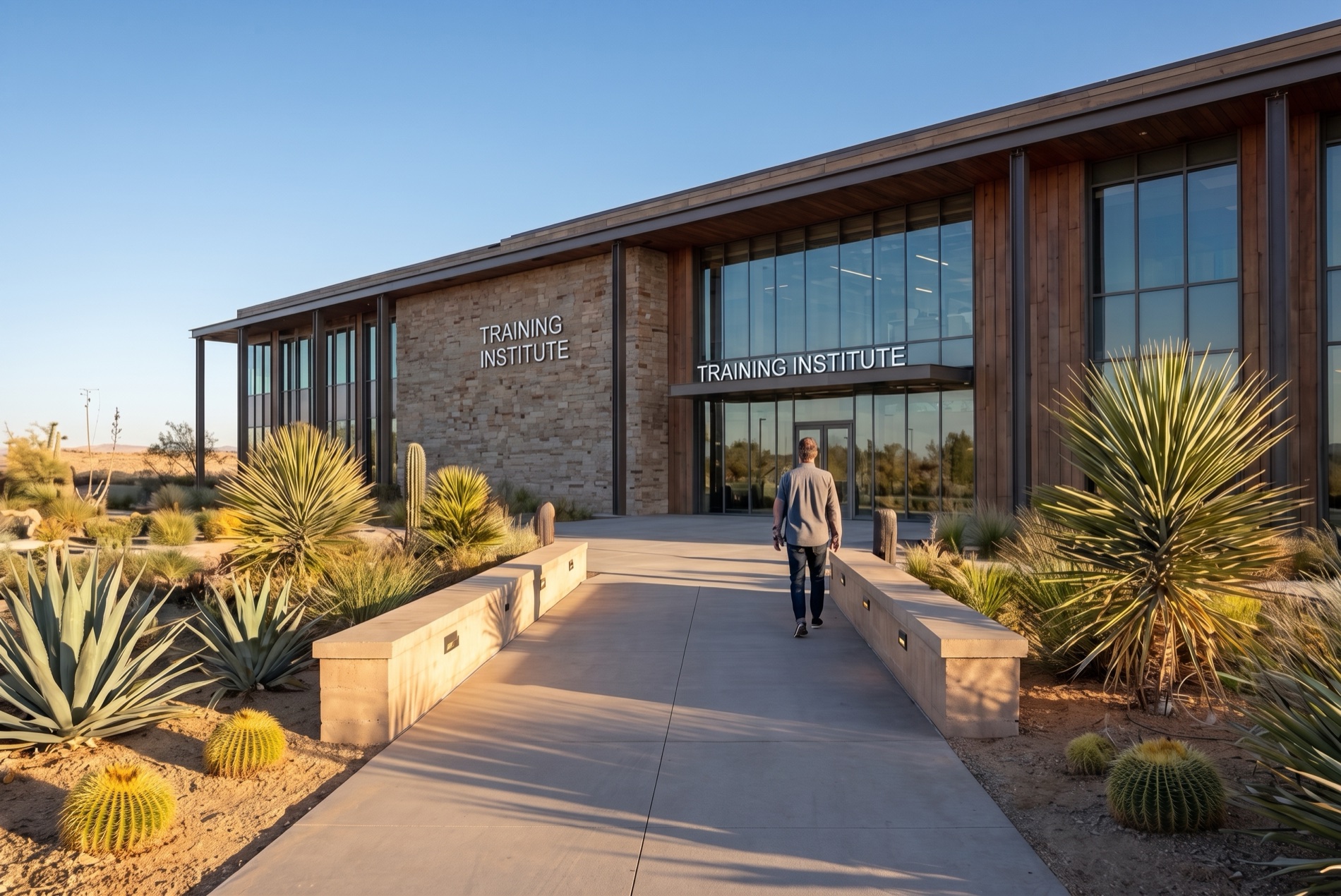
Second, we give back the thing a town cannot build on its own: skilled, dignified work. In front of every campus sits a training institute — eight departments, thirty-four hands-on courses, certificates that ladder into associate degrees. Specifically, it reskills local residents for the exact careers this industry is starving to fill.
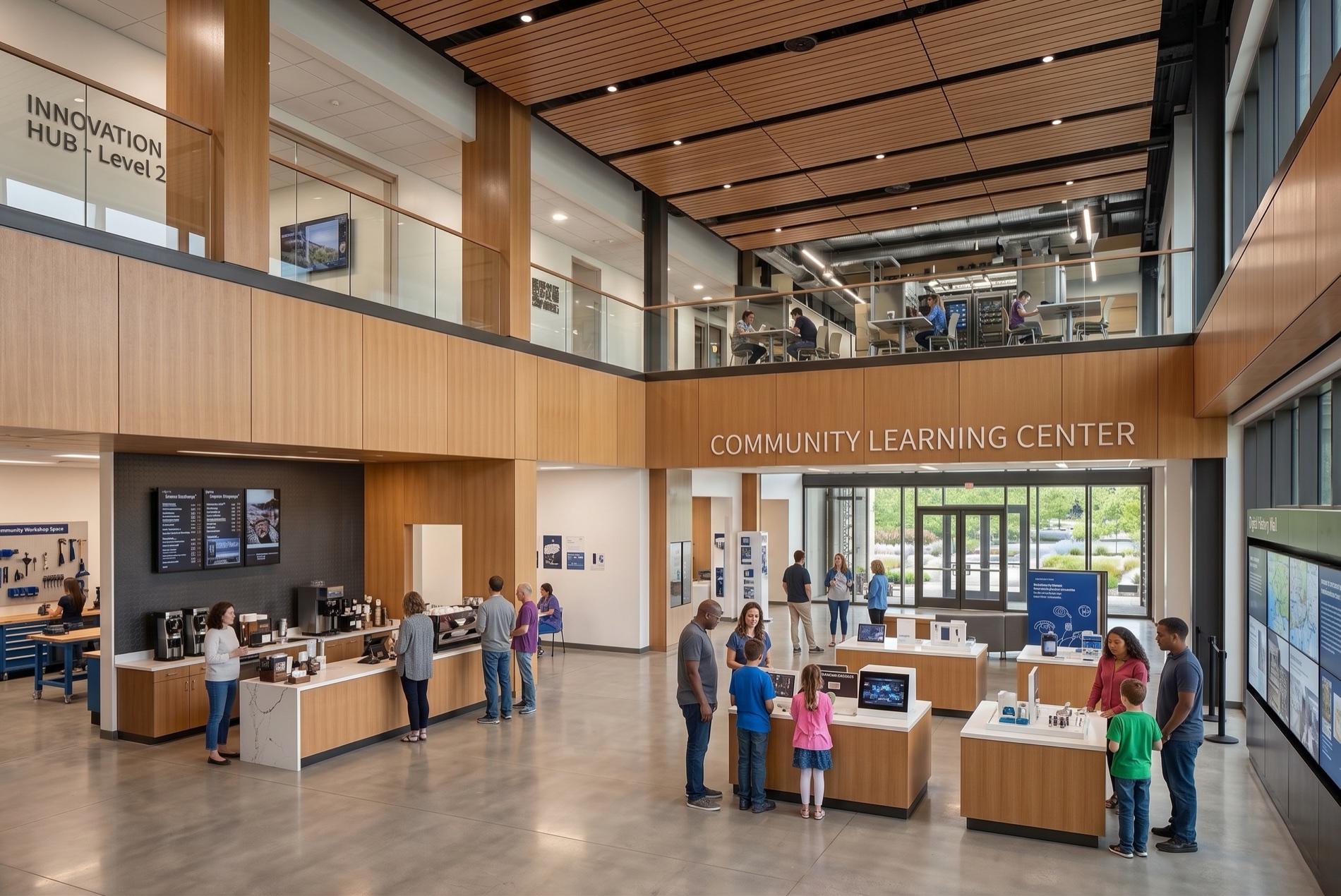
For instance, the Uptime Institute reports operators need millions of workers they cannot find, while McKinsey projects a multi-trillion-dollar build-out through 2030. Because the shortage is this severe, we would rather train the neighbor than import the labor. Moreover, the front door is a community learning center — free AI classes, a hall the town can book, and a live wall showing the campus’s power, water, and jobs in real time. And residents pay nothing for any of it. Instead, we fund it by stacking the workforce incentives the project already earns.
What we give, and what we refuse to take
- We don't take power: the campus is self-generated and islanded.
- We don't take water: a closed loop means zero municipal gallons.
- We give work: a training institute that ladders residents into careers.
- We open the doors: a public learning center, free to the town.
- We carry the cost: funded by incentives, not by tuition or taxpayers.
Why this has to be the mission
I did not understand all of this in that Rockdale kitchen in 2019. But I understand it now. This company cannot only build AI factories. Ultimately, it has to prove that the values which built good communities in this country still apply to the most advanced technology we have ever made.
So let me be plain about what I believe. A technology company can walk into a community and leave it better than it found it — not in theory, but in fact. Because I have already done it once, in Rockdale, Texas, I am not guessing. I know the recipe. I know how to build it. And I know I can do it again.
That conviction is not a line for the website. Rather, it is the reason the company exists. My grandparents were right, and eighty years later their lesson still holds. Give more than you take, and you earn the right to stay. If you want to see how we put that to work on a real site, explore the rest of SAVRN or read more field notes.
— Chad Harris, Founder
Frequently asked questions
What does "give more than you take" actually mean for an AI factory?
It means the campus is engineered to add to a community and subtract nothing it needs. Specifically, it generates its own power, uses no municipal water, trains local residents, and opens a public learning center. In short, the town ends up with more than it had before we arrived.
Is this just a marketing message?
No. Because the principle is built into the engineering, it is not a slogan you can walk back. For example, the closed cooling loop and the islanded power system are physical facts of the design. The training institute and the community center open with the campus, not years later.
What happened in Rockdale, Texas?
In 2019, four of us moved to Rockdale and set out to change how people saw the Bitcoin industry in a mining town. Notably, that experience taught me you can run a demanding operation and still be a good neighbor. Seven years later, that lesson became the foundation of SAVRN.
How does the campus avoid taking the community's power?
The AI factory makes its own electricity from renewable baseload, solar, and storage, and it runs islanded from the public grid. Therefore local rates and the interconnection queue are unaffected. Because the factory never competes for capacity, the usual fight over power never starts.
How much municipal water does it use?
None. The cooling system is a sealed, closed loop, so no water is drawn from the town. By contrast, the wider industry consumed on the order of 17 billion gallons for cooling across a single year.
What is the training institute?
It is a full workforce school at the front of the campus. Specifically, it spans eight departments and thirty-four courses that ladder into certificates and associate degrees. In short, it trains people for the exact jobs the campus and the wider industry are hiring for.
Do residents pay for the training?
No. Instead, the program is funded by stacking the workforce incentives the project already earns, so it is free to enroll. As a result, cost is never the barrier between a resident and a new career.
Why don't other data-center companies do this?
Across the industry, giving back is treated as a cost to minimize rather than the reason to build. We think that is backwards, so we made giving more than you take the core mission, not an afterthought.
Who is behind SAVRN?
SAVRN was founded by Chad Harris, who began in the Bitcoin industry in Rockdale, Texas in 2019. Importantly, the company’s founding belief is that the values which built strong communities must carry into AI infrastructure.
How soon does a community see the benefit?
From the first phase. The institute and the learning center open alongside the campus, not at some distant future date. In fact, workforce training is designed to begin early so residents are ready as roles come online.