Future Ready AI Infrastructure for Enterprises
The Future of Enterprise AI: Why Legacy Data Centers Are Failing Modern Workloads Future Ready AI Infrastructure is disconnected between what AI requires and what legacy data centers provide creates friction, wastes capital, and ultimately slows innovation. According to Gartner, AI-optimized servers will represent 44% of total data center power usage by 2030, up from just […]
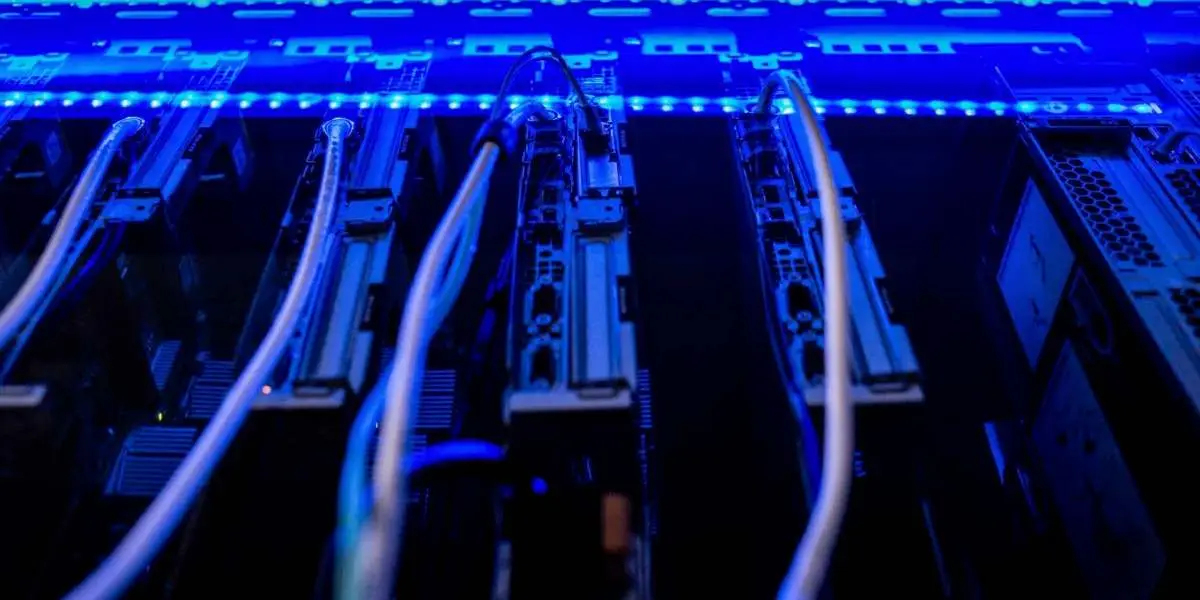
The Future of Enterprise AI: Why Legacy Data Centers Are Failing Modern Workloads
Future Ready AI Infrastructure is disconnected between what AI requires and what legacy data centers provide creates friction, wastes capital, and ultimately slows innovation. According to Gartner, AI-optimized servers will represent 44% of total data center power usage by 2030, up from just 21% in 2025. Consequently, enterprises must rethink their physical foundation to compete effectively in the AI era.
Legacy Infrastructure Can’t Power the Future of Enterprise AI
Enterprise AI at scale represents an entirely different operational paradigm. Unlike traditional computing workloads, AI systems run continuously, consume enormous amounts of power, and generate extreme thermal loads that legacy infrastructure simply cannot handle.
Furthermore, the numbers tell a compelling story. The International Energy Agency reports that global data center electricity consumption reached 415 TWh in 2024—approximately 1.5% of worldwide electricity demand. Moreover, this figure is projected to more than double to 945 TWh by 2030, with AI workloads driving the majority of this growth.
Here’s why legacy data centers are failing:
Thermal Throttling Destroys Performance
When GPUs overheat, they automatically reduce clock speeds to protect themselves. As a result, your hardware investment delivers diminishing returns with every workload. Modern AI chips from NVIDIA now draw between 700 and 1,200 watts per chip, according to Deloitte research. Traditional air cooling, however, has a maximum heat flux density of just 1.6 W/cm², making it fundamentally inadequate for these thermal loads.
Air Cooling Wastes Space and Money
Traditional cooling requires wide rack spacing, significantly increasing physical footprint and operational costs. Additionally, the Uptime Institute’s 2024 Global Survey found that cooling systems in less-efficient enterprise data centers consume over 30% of total facility energy. In contrast, efficient hyperscale facilities achieve cooling energy consumption as low as 7%. Find more details here.
High PUE Equals Wasted Capital
The industry average Power Usage Effectiveness (PUE) remains stuck at 1.56, according to Uptime Institute data. This means that for every dollar spent powering IT equipment, enterprises waste an additional 56 cents on overhead—primarily cooling. Over the lifetime of a facility, this inefficiency costs millions in both direct expenses and missed opportunities.
The Answer: Purpose-Built Future Ready AI Infrastructure for Enterprise
You cannot solve a 2025 problem with a 2010 solution. The future of enterprise AI demands a completely new standard, beginning with how you power, cool, and scale your infrastructure.
1. Liquid and Immersion Cooling: The New Foundation
This technology isn’t theoretical—it’s foundational for AI workloads. Submerging GPUs in dielectric fluid removes heat up to 1,000 times more efficiently than air. According to Data Center Frontier, immersion cooling systems achieve PUE ratings between 1.03 and 1.1, compared to 1.6-1.9 for traditional air-cooled facilities.
The benefits are substantial:
- Eliminates thermal hotspots that cause GPU throttling
- Reduces cooling power consumption by 30% or more, according to ACEEE research
- Supports rack densities of 80-140 kW, compared to just 10-15 kW for air-cooled cabinets
- Extends hardware lifespan by maintaining consistent operating temperatures
The liquid cooling market reflects this shift. Research indicates the market will grow from $1.5 billion in 2024 to $6.2 billion by 2030, with over 50% of new hyperscale capacity expected to be liquid-cooled by 2027.
2. Direct Power Delivery: Eliminating Inefficiency
AI hardware is both power-hungry and sensitive to electrical fluctuations. Direct power delivery bypasses inefficient legacy distribution units, delivering steady, high-throughput electricity exactly where it’s needed.
The scale of power requirements has grown dramatically. Traditional server racks consume 5-15 kW, while AI-optimized racks with high-performance GPUs require 40-100+ kW. Some cutting-edge AI training facilities now push individual racks beyond 120 kW. Without direct, purpose-designed power delivery, these systems cannot operate at peak efficiency.
3. Modular Deployment: Speed to Market
Enterprises shouldn’t need years to bring capacity online. However, the reality of grid interconnection tells a different story. According to Lawrence Berkeley National Laboratory, only 13% of projects that submitted interconnection requests from 2000-2019 reached commercial operations by the end of 2024. The median time from request to operation now averages approximately five years.
In certain markets, the situation is even worse. Blackstone reports that interconnection wait times in key U.S. markets have ballooned to 7-10 years. Virginia’s “data center alley” faces waitlists of up to seven years, and Google has publicly stated that grid connection is now its single biggest challenge.
Engineered AI data centers with on-premise power generation can bypass these delays entirely, allowing multi-megawatt blocks to be deployed in months rather than years. This approach lets enterprises align infrastructure growth with actual business needs—not bureaucratic timelines.
It’s Not Just About Hardware—It’s About Outcomes
What’s ultimately at stake here? Time. Results. Competitive advantage.
Consider these questions:
- Can your team iterate AI models faster than competitors?
- Can you deploy intelligent tools ahead of market rivals?
- Can your infrastructure scale with demand without multi-year delays?
If the answer is no, your infrastructure isn’t supporting growth—it’s actively constraining it.
The truth is straightforward: the future of enterprise AI isn’t limited by innovation or algorithms. It’s limited by infrastructure. RAND Corporation research projects that AI data centers could need 68 GW of power capacity by 2027—nearly doubling global data center power requirements from 2022 and approaching California’s entire 2022 power capacity of 86 GW.
How Savrn Delivers the Future of Enterprise AI
At Savrn, we don’t sell space. We deliver fully integrated, engineered AI data centers purpose-built to power the next generation of enterprise AI workloads.
What Sets Savrn Apart:
- Less than 12-month deployment: From land and power to live racks, we compress industry-standard timelines of 48+ months down to 6-12 months through vertical integration and on-premise power generation.
- Engineered for performance: Liquid-cooled, GPU-optimized clusters achieving rack densities of 235-600 kW with PUE ratings as low as 1.1.
- Direct-to-source power: Strategic power partnerships that bypass grid interconnection delays entirely.
- Complete operational stack: Managed services, compliance frameworks, and real-time monitoring included.
- Full data sovereignty: 100% customer-dedicated deployments ensuring complete control over your AI infrastructure and data.
Our Infrastructure Supports:
- Large model training and fine-tuning requiring sustained high-performance computing
- Real-time inference demanding consistent, low-latency responses
- Sovereign and private AI where data residency and security are non-negotiable
You don’t need to guess or wait. We build it, power it, and deliver it—on time.
Is Your Data Center Aligned with the Future Ready AI Infrastructure?
Ask yourself these critical questions:
- Are your GPUs experiencing thermal throttling during peak workloads?
- Are your cooling costs approaching or exceeding your compute costs?
- Are you waiting months—or years—to scale capacity?
- Is grid interconnection the bottleneck preventing your AI initiatives?
If the answer to any of these is yes, you’re not alone—but you also don’t have to remain stuck.
Let’s talk. We help enterprises build AI infrastructure that performs, scales, and delivers ROI—fast. Because the future of enterprise AI doesn’t wait for legacy infrastructure to catch up.
Frequently Asked Questions
1. Why can’t legacy data centers support enterprise AI workloads?
Legacy data centers were designed for general-purpose computing with relatively low thermal loads of 5-15 kW per rack. Enterprise AI workloads require 40-100+ kW per rack with continuous operation. Additionally, traditional air cooling cannot efficiently remove the heat generated by modern GPUs drawing 700-1,200 watts each, resulting in thermal throttling that degrades performance.
2. What is PUE and why does it matter for AI data centers?
Power Usage Effectiveness (PUE) measures data center efficiency by dividing total facility power by IT equipment power. The industry average is 1.56, meaning 56% extra energy is consumed for cooling and overhead. Purpose-built AI facilities with liquid cooling achieve PUE ratings of 1.03-1.2, dramatically reducing operational costs and environmental impact.
3. How does immersion cooling improve AI infrastructure performance?
Immersion cooling submerges servers in dielectric fluid that removes heat up to 1,000 times more efficiently than air. This eliminates thermal hotspots, prevents GPU throttling, reduces cooling energy consumption by 30% or more, and enables rack densities of 80-140 kW—impossible with traditional air cooling.
4. Why are grid interconnection delays such a significant problem?
According to Berkeley National Laboratory, only 13% of projects requesting grid interconnection from 2000-2019 reached commercial operations. Average wait times now exceed five years, with some markets seeing 7-10 year delays. For enterprises needing AI capacity now, these timelines are unacceptable.
5. What is sovereign AI infrastructure and why is it important?
Sovereign AI infrastructure provides complete control over data residency, security, and compliance within dedicated facilities. This is critical for enterprises in regulated industries, government contractors, and organizations with strict data governance requirements who cannot rely on shared cloud infrastructure.
6. How much power does enterprise AI actually require?
AI-optimized servers will consume 432 TWh by 2030, up from 93 TWh in 2025—nearly a fivefold increase according to Gartner. Individual AI training clusters can require 50-500 MW of power, scales that overwhelm traditional utility planning and require purpose-built power infrastructure.
7. What rack density should enterprises plan for AI workloads?
Traditional racks operate at 5-15 kW. Current AI workloads require 40-60 kW minimum, with cutting-edge facilities supporting 100-140 kW per rack. Forward-thinking enterprises should plan for infrastructure capable of 200+ kW per rack to accommodate next-generation GPU architectures.
8. Can enterprises bypass grid interconnection delays?
Yes. Purpose-built Future Ready AI Infrastructure data centers with on-premise power generation can bypass utility interconnection queues entirely. This approach transforms deployment timelines from 5-10 years to under 12 months, providing critical competitive advantage in the AI era.
9. What makes liquid cooling essential for AI rather than optional?
Modern AI chips generate thermal loads exceeding air cooling’s 1.6 W/cm² maximum heat flux capacity. NVIDIA’s latest architectures specifically require liquid cooling for optimal operation. Without it, GPUs throttle performance, reducing the value of hardware investments.
10. How should enterprises evaluate AI data center partners?
Key evaluation criteria include: deployment timeline guarantees, cooling technology capabilities (liquid/immersion), power delivery architecture, PUE ratings, data sovereignty options, compliance certifications, and operational support services. Partners should demonstrate proven experience with high-density AI workloads.
Related Articles
- Understanding AI Data Center Cooling Technologies: Air vs. Liquid vs. Immersion – A comprehensive comparison of cooling approaches for enterprise AI infrastructure
- The Grid Interconnection Crisis: Why Power Is the New Bottleneck for AI – Deep dive into utility challenges and alternative power strategies
- Data Sovereignty in the AI Era: Protecting Enterprise Intelligence Assets – Best practices for maintaining control over AI models and training data
- Calculating Total Cost of Ownership for Enterprise AI Infrastructure – Financial framework for evaluating build vs. buy decisions
- NVIDIA GPU Power Requirements: Planning Infrastructure for Current and Next-Generation Architectures – Technical specifications and infrastructure planning guide
Ready to build Future Ready AI Infrastructure that actually performs? Contact Savrn to discuss your enterprise AI infrastructure requirements.